Alpha
Bismillah
Charlie Delta
Echo
Foxtrot
Golf Hotel
insaallah Juliett Kilo
Lima Mike November Oscar
Piaggio Quebec Romeo
Sierra Turks Uniform
Victory Water X-ray
Yankee Zulu MainPage
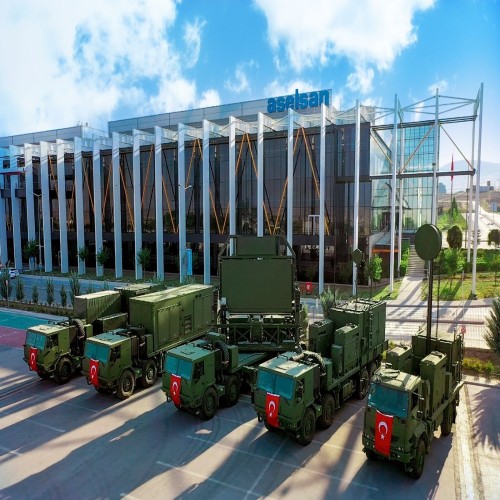
Early Warning Radar:
An early warning radar (EWR) is a long-range radar system designed to detect distant, incoming threats such as ballistic missiles, enemy aircraft, and cruise missiles giving military forces and civil authorities the maximum possible time to prepare defenses or initiate countermeasures.earplug A rubber, wax, or soft plastic device worn in the canal of the ear to keep loud noises from damaging the ear and to help prevent hearing loss.
earth connection An electrical connection with a ground. The United Kingdom uses earth for the electrical term ground.
earth ground In electricity, a ground connected directly to Earth. This connection is usually achieved by attaching a grounding clamp to a metal water pipe or to a grounding rod driven into the ground. The third plug in a three-wire system is usually connected to earth ground.
Earth induction compass A direction indicator in an aircraft that derives its signal from the lines of flux of the Earth cutting across the windings of the flux valve.
Earth s magnetic field The magnetic lines of flux that surround the Earth. These lines enter and exit the Earth at the magnetic north and south poles, close to, but not at, the geographic poles.
easy-out A screw extractor used to remove broken screws or studs. It is made of hard steel and has a point with a tapered, left-hand spiral-like thread. A hole is drilled in the shank of the broken screw and the easy-out is screwed into it by turning it counter-clockwise.
eccentric A disk or wheel having its axis of revolution displaced from its center so that it is capable of imparting reciprocating motion.
eccentric cam A circular cam with a displaced axis. As the shaft rotates about its axis, the outside of the eccentric cam rises and falls, changing rotary motion into reciprocating motion.
echo In radar terminology, the energy reflected or scattered by a target and the radar scope presentation of the return from a target.
economizer system A power compensator or a power enrichment system in a carburetor or fuel injection system that adds additional fuel. It enriches the fuel mixture at high power engine operations. The economizer is closed during cruising speeds.
E-core The laminated core of an electric transformer cut in the shape of the letter E. The coil windings are mounted on the core.
eddy In meteorology, an organized movement of air in a circulation of a particular size. The organization is more obvious in the larger scale circulations.
eddy current A current induced into the core of a coil, transformer, or the armature core of a motor or generator by current flowing in the winding. Eddy currents cause power loss and are minimized by laminating the iron cores.
eddy current inspection A nondestructive inspection used to locate surface or subsurface defects in a metal part. This is a comparison-type inspection, based on the difference in conductivity of a sound and a defective part.
eddy current losses The electrical losses in the core of a transformer or other electrical machine. The induction of eddy currents into the core robs the machine of some of its power.
edge distance The distance from the center of a bolt or rivet hole to the edge of the material.
edge thickness The thickness of the edge of a material.
edge-grain wood Wood that has been sawed from the tree in such a way that the edges of its grain are visible in the wide part of the plank. Also referred to as quarter-sawed wood.
Edison effect The emission of electrons from a heated filament attached to an electrode placed in an evacuated tube. The discovery of Thomas A. Edison in 1883.
eductor A jet pump used in some aircraft fuel systems to remove fuel from a vent-drain tank and return it to the main tank.
effect A principle of learning, which states that learning is strengthened when accompanied by a pleasant or satisfying feeling, and that learning is weakened when associated with an unpleasant feeling.
effective pitch The actual distance a propeller moves through the air in one revolution. It is the difference between the geometric pitch of the propeller and the propeller slip.
effective thread The effective (or useful) thread includes the complete thread and that portion of the incomplete thread having crests not fully formed.
effective value The root mean square (RMS) value of sine wave AC. It is equivalent to 0.707 times the peak value and corresponds to the DC value that will produce the same amount of heat.
effective voltage The equivalent direct current (DC) voltage in an alternating current system. It is calculated as .707 times the peak sinusoidal waveform voltage value. In a non-sinusoidal waveform, it is the root mean square voltage value.
efficiency A measure of a system s effectiveness or a mechanism found by dividing the output of the mechanism by its input. It is usually expressed as a percentage.
effort arm The distance from the input to the fulcrum on a lever. The distance from the fulcrum to the output point is referred to as the load arm.
E-gap angle The number of degrees of magnet rotation beyond its neutral position at which the primary magneto breaker points open. It is at this point that the primary current flow is the greatest and, therefore, the rate of collapse of the primary field will induce the greatest voltage into the secondary winding.
E-glass In composites, a type of fiberglass. The E stands for electrical. It is used primarily when there could be interference to radio signals such as with a radome.
egoistic needs Basic personal needs that relate to a student s self-esteem and are directly linked to self-confidence, independence, achievement, competence, and knowledge. Another type relates to a student s reputation, such as status, recognition, appreciation, and respect of associates.
eight-harness satin In composites, a type of fabric weave. The fabric has a seven-by-one weave pattern in which a filling thread floats over seven warp threads and then under one. Like the crowfoot weave, it looks different on one side than on the other. This weave is more pliable than any of the others and is especially adaptable to forming around compound curves, such as on radomes.
ejection seat An emergency escape seat found in military aircraft that, when used, is propelled or shot from the aircraft and parachutes to the ground.
ejector pump A pump that produces a low hydraulic pressure. The low pressure is used to eject or move fluid from one place to another. See also eductor.
elastic limit The maximum load (in PSI) a metal can withstand without causing a permanent deformation. If a metal hasn t reached its elastic limit, it will return to its original dimensions when the load is removed no matter how many times the load is applied.
elastic stop nut A self-locking nut with a collar of elastic material and an inside diameter slightly smaller than the outside diameter of the bolt or stud it fits. The collar fills the bolt threads and prevents the nut from backing out inadvertently.
elasticity The capability of an object or material to be stretched and to recover its size and shape after deformation.
elastomeric bearing A metal and rubber composite bearing used to carry oscillating loads where complete rotation is not needed. The bearing is made of alternate layers of an elastomer and metal bonded together. Elastomeric bearings can be designed to take radial, axial, and torsional loads.
elastomers A rubber or synthetic rubber used in the layers between the metal in an elastomeric bearing. Elastomers can be stretched to twice their original length and can return to their original size and shape when released.
E-layer A layer of ionized air in the ionosphere found approximately 55 to 90 miles above Earth.
elbow A fluid line fitting used to join two pieces of tubing at an angle of 90 .
Elcon connector A slip-on type terminal, held in place with a hand screw, for aircraft battery installation. It is similar to the Cannon connector.
electret A permanently polarized dielectric material.
electret microphone A device that changes sound pressure into an electrical signal. It consists of a diaphragm made of a thin foil of electret placed next to a metal coated plate. Sound pressure that is picked up by the microphone vibrates the diaphragm causing a voltage. The waveform of this voltage is a copy of the waveform of the sound that vibrated the diaphragm.
electric bonding The connecting of metal structural parts together with electrical conductors in order to keep them at the same electrical potential. Bonding eliminates static electricity build-up, which causes radio interference.
electric discharge machining A process of machining complex metal shapes by a controlled electric arc that erodes the metal.
electric drill motor An electric motor, usually of the universal type, which is geared down to provide additional torque and is equipped with a chuck to hold a twist drill.
electric inertia starter An electric starter motor for aircraft reciprocating engines that spins a small flywheel to a high speed. The energy in the flywheel, when coupled to the engine crankshaft, turns or cranks the engine.
electric strain gauge A device used to measure the amount of physical strain placed on a piece of conductive material. A strain gauge is made of a piece of very fine wire that is bonded to the material in which the strain is to be measured, and the two ends of the wire are connected into a sensitive, resistance-measuring bridge circuit. When the material on which the strain gauge is mounted is strained, the wire in the strain gauge is stretched. It becomes longer
and thinner. When its length and its cross sectional area changes, its resistance changes. The change in resistance of the strain gauge is proportional to the amount of strain in the material, and the amount of strain is proportional to the amount of stress that caused it.
electric wave One of the components of a radio wave produced along the length of the antenna.
electrical bus An electrical distribution point to which many circuits can be connected.
electrical charge An excess (negative charge) or deficiency (positive charge) of electrons in a body.
electrical diagram A diagram or drawing showing the relationship of electrical components within a system.
electrical energy The energy possessed by a substance or device because of a difference in electrical potential. This can exist because of electromagnetic or electrostatic forces.
electrical equipment An electrical unit or combination of units that make up the electrical system.
electrical filter An arrangement of a choke coil and condenser used in an electrical circuit to create a steady current flow.
electrical generator A mechanical device that converts mechanical energy into electrical energy.
electrical insulator A material that prevents the passage of electricity. The material s outer electrons are so forcibly held to the nucleus that they cannot be dislodged to flow in a circuit. Glass is an example of a good insulating material.
electrical lines The wiring used for transporting electrical energy to electrical equipment.
electrical resistance welding The fusion of metals by clamping them together and passing a high amperage electrical current through the joint. The resulting heat melts the metal, and the pressure causes the two pieces to fuse together. Spot and seam welding are forms of electrical resistance welding.
electrical shield A housing made of a conductive material that encloses an electrical circuit. The shield picks up any electrical energy radiated from the circuit and carries it to ground so it cannot interfere with any other electrical or electronic equipment.
electrical short An unintentional electrical system fault connection that provides a low-resistance path across an electrical circuit. Electrons can flow through the short to ground without passing through the load.
electrical steel A low-carbon steel alloy that contains up to 5% silicon and is used in the form of thin laminations for the cores of transformers and the armatures of electrical motors and generators.
electrical strength The maximum amount of voltage that can be placed on an insulator before the insulator breaks down and allows electrons to flow through it.
electrical symbols The graphic symbols used in aircraft drawings to represent electrical wiring or components.
electrical zero A designated rotor position in synchro systems. It is a reference position for meshing gears and for installing indicators.
electrically detonated squib An explosive charge, usually installed in fire extinguisher systems, that is ignited by electrical methods.
electrically suspended gyroscope A gyroscope with a rotor supported in an electromagnetic field. This allows the rotor to spin with an absolute minimum of friction.
electricity The physical phenomena arising from the existence of positive and negative electrical charges. Electricity can be observed in the attracting and repelling of objects electrified by friction and in natural phenomena (lightning and aurora borealis). Usually employed in the form of electrical currents generated by a mechanical generator device that forces the flow of electrons from an area having an excess of electrons to an area with a shortage of electrons. In the process, heat is produced, and a magnetic field surrounds the conductor.
electroacoustic transducer A device that converts variations in sound pressure into variations of voltage, or vice versa.
electrochemical action The corrosive results of the potential difference of two different metals in contact with each other in the presence of an electrolyte.
electrochemical series A list of metallic elements that ranks them according to the ease with which they give up electrons. All metals are listed on an electrochemical series or nobility chart from the most vulnerable to corrosion (least noble) to the least vulnerable (most noble). See also dissimilar metal corrosion.
electrochemistry The branch of chemistry that deals with the electrical voltages existing within a substance because of its chemical composition.
electrode A terminal element in an electric device or circuit. Examples are the plates in a storage battery, the elements in an electron tube, and the carbon rods in an arc light.
electrode potential A voltage that exists between different metals and alloys because of their chemical composition. An electrical current will flow between these materials when a conductive path is provided.
electrodynamic damping The diminishing of oscillations of the pointer of an electrical meter by the generation of electromagnetic fields in the frame of the moving coil.
electrogalvanizing -The process of coating metal with zinc by electroplating.
electro-hydraulic control A hydraulic control that is electrically actuated.
electrolysis A chemical change produced in an electrolyte by an electric current.
electrolyte A nonmetallic conductor, such as a liquid or a gas, in which current is carried by the movement of ions.
electrolytic The action of conducting electrical current through a nonmetallic conductor by the movement of ions.
electrolytic capacitor A capacitor that uses metal foil for the electrodes and a thin film of metallic oxide as the dielectric. The sheets of metal foil are separated by a piece of porous paper that is impregnated with an electrolyte. The capacity is affected by the thickness of the dielectric.
electromagnet A magnet produced by electrical current flowing through a coil of wire. The coil is often wound around a soft iron core that concentrates the lines of flux and intensifies the magnetic field.
electromagnetic emission The radiation of electromagnetic energy that is produced when electricity flows through a conductor.
electromagnetic induction A transfer of electrical energy from one conductor to another by means of a moving electromagnetic field. A voltage is produced in a conductor as the magnetic lines of force cut or link with the conductor. The value of the voltage produced by electromagnetic induction is proportional to the number of lines of force cut per second. An emf (electromagnetic force) of 1 volt will be induced when 100,000,000 lines of force are cut per second.
electromagnetic radiation An electrical energy of extremely high frequency and short wavelength that will penetrate solid objects and expose photographic film.
electromagnetic vibrator A device that interrupts the flow of DC through a set of contacts and changes it into pulsating DC. The contacts will vibrate between open and closed as long as the vibrator is connected to a source of DC electricity.
electromagnetic waves A resonance of electric and magnetic fields that move at the speed of light.
electromagnetism The magnetic field emanating from a conductor carrying electrical current. Its strength is determined by the amount of current flowing in the conductor.
electromechanical frequency meter An instrument that uses the resonant frequency of a vibrating metal reed to measure the frequency of alternating current. Also referred to as a vibrating-reed frequency meter.
electron 1. A subatomic particle with a negative electric charge. It spins around the nucleus of an atom, and under certain conditions, can be caused to move from one atom to another. Electrons that travel in this manner are called free electrons. 2. The negatively charged part of an atom of which all matter is made. Electrons circle around the nucleus of an atom in orbits or shells.
electron beam A narrow beam of free electrons in a vacuum. In cathode-ray tubes (CRTs), the electron beam strikes luminescent phosphors, causing them to emit light. CRTs are used in TV receivers, radar, computer monitors, and some instrument displays.
electron beam welding A process of welding metal by the heat that is produced when a high-speed stream of electrons strike the metal.
electron current flow The flow of electrons from negative to positive in a circuit outside of the source.
electron drift The relatively slow natural movement of individual electrons that move from atom to atom within the conductor.
electron force The force causing electrons to move through a conductor (electromagnetic force). The symbol E is used in calculations until the actual number of volts is determined.
electron gun The combination of an electron-emitting cathode together with accelerating anodes and beam-forming electrodes to produce the electron beam in a cathode-ray tube.
electron spin The rotation of an electron about its own axis.
electron tube 1. A device consisting of an evacuated or gas-filled envelope containing electrodes for the purpose of controlling electron flow. The electrodes are usually a cathode electron emitter, a plate anode, and one or more grids. 2. A vacuum tube. It consists of a cathode and its heater, the grids, and plate that are usually housed in a glass envelope. The tube may also be filled with an inert gas.
electron-flow The current-flow in a circuit is actually the flow of electrons. Electrons flow from negative to positive in the external circuit.
electronic counter-countermeasures Methods used by the military to counter the ECM (Electronic Countermeasures) of the enemy and decrease the effectiveness of the enemy s countermeasures. See also electronic countermeasures.
electronic countermeasures Methods of decreasing the effectiveness of enemy communications or radar.
electronic emission The freeing of electrons from the surface of a material usually produced by heat.

Electronic Leak Detector: An electronic leak detector is a specialized device used to identify and pinpoint gas or fluid leaks by measuring changes in electrical current, chemical reactions, infrared light absorption, or sound waves. They provide the fastest and most sensitive path to locating hazards or system inefficiencies.
electronic moisture indicator A device for checking moisture in a material. It operates on the principle of measuring the conductivity of the material.
electronic oscillator 1. An electronic device used in a leak detector that emits a changing audible tone when a leak is detected. 2. An electronic circuit that converts DC into AC electricity.
electronic voltmeter An electronic instrument used to measure voltage.
electronics 1. The branch of science that deals with electron flow and its control. 2. In physics, the study and use of the movement and effects of free electrons and with electronic devices.
electroplating An electrochemical method of depositing a thin layer of metal on some object. The object to be plated is the cathode, the metal that will be deposited is the anode, and the electrolyte is a nonmetallic conductor that will form ions of the plating metal.
electrostatic charge A stationary electrical charge on an object caused by an accumulation of electrons or by a depletion of electrons.
electrostatic deflection control A method of controlling the position of a beam of electrons on the face of a cathode-ray tube. The beam of electrons that forms the trace or picture on a cathode-ray tube can be deflected to the correct position on the screen by electrostatic charges on plates that are placed above, below, and on each side of the beam.
electrostatic energy In a capacitor, the energy stored when two opposing electrical charges act across the dielectric.
electrostatic field A field of force that exists around a charged body. Also referred to as a dielectric field.
electrostatic stress The electrical force that tends to puncture an insulator. It is caused by an accumulation of electrical charges on a body.
electrostatics The branch of physics that deals with the attraction and repulsion of static electrical charges.
electrovalent or ionic bond The bond formed by two atoms when one atom gives up one or more valence electrons to the other. The bond is based on the attraction between the positive and negative ions thus formed.
element The basic chemical substances that cannot be divided into simpler substances by chemical means.
element of threat A perception factor that describes how a person is unlikely to easily comprehend an event if that person is feeling threatened since most of a person s effort is focused on whatever is threatening them.
elevator A horizontal, movable control surface on the tail of an airplane. It is used to rotate the airplane about its lateral axis.
elevator angle The angular displacement of the elevator from its neutral position.
elevator control tab A metal tab located on the elevator that helps the pilot control the elevator.
elevator trim stall A demonstration stall that a flight instructor shows a student pilot. It simulates the danger zone defined by a rejected landing or go-around, and is demonstrated at altitude with the airplane configured and trimmed for a typical final approach to landing.
elevon A control surface that combines the functions of both ailerons and elevators. Movement of the control wheel to the right or left causes the elevons to move differentially. (When the left elevon moves up, the right elevon moves down.) The differential movement of the elevons causes the airplane to rotate about its longitudinal (roll) axis.
ellipse An oval. A curve generated by a point moving such that the sum of its distances from two fixed points (foci) is a constant. It is the plane cross-section of a cylinder at other than a right angle or a right cone at other than parallel to the base.
elliptical Of or having the form of an ellipse. An elongated oval shape.
elongate To stretch or lengthen.
e-mail Electronic mail. Mail sent and received between computers.
embarkation The loading of passengers and cargo onto the airplane.
embedded circulation A relatively small scale circulation embedded in, and driven by, a larger scale circulation.
embossing The process of raising a boss or protuberance on the surface.
emergency A distress or an urgency condition.
emergency air pressure The compressed air stored in high-strength steel cylinders used to provide emergency landing gear extension and emergency braking in the event of the failure of the main power system.
emergency descent A maneuver designed to allow the aircraft to descend to a lower altitude at the fastest, most practical airspeed, in the event of an engine fire, loss of cabin pressure, or other emergency.
emergency locator transmitter (ELT) A radio transmitter attached to the aircraft structure which
emery paper A fine abrasive paper composed of pulverized corundum or aluminum oxide and used for polishing.
emery wheel A wheel consisting of a fine abrasive material composed of pulverized corundum or aluminum oxide and used for grinding and polishing.
emitter The electrode of a transistor that corresponds to the cathode of a vacuum tube. Conventional current enters a transistor through the emitter.
empennage The rear or tail portion of an airplane.
empty field myopia The normal tendency of the eye to focus at only 10 to 30 feet when looking into a field devoid of objects, contrasting colors, or patterns.
empty weight The weight of an aircraft, its power plant, and all of the fixed equipment. It includes unusable fuel and undrainable oil for aircraft not certified under FAR Part 23 (aircraft certified under FAR Part 23 include full oil as part of empty weight).
empty weight center of gravity (EWCG) The center of gravity of an airplane that includes all fixed equipment, the unusable fuel, and undrainable oil for aircraft not certified under FAR Part 23 (aircraft certified under FAR Part 23 include full oil as part of empty weight).
empty weight center of gravity range The range determined so that the empty weight center of gravity limits will not be exceeded under standard specifications loading arrangements.
empty weight moment The moment of an aircraft at its empty weight.
emulsion-type cleaner A chemical cleaner that mixes with water or petroleum solvent to form an emulsion. It is used to loosen dirt, soot, or oxide films from the surface of an aircraft.
En Route Automated Radar Tracking System (EARTS) An automated radar tracking system that combines inputs from multiple short- and long-range radars into one display.
enamel A material whose pigments are dispersed in a varnish base. The finish cures by chemical changes within the base.
encapsulate To completely surround or cover something.
encased Enclosed in a housing.
enclosed relay An electrical relay in which both the coil and the contacts are enclosed in a protective housing.
encode In electronics, to put an analog signal into digital format.
encoding altimeter A pneumatic altimeter that provides a signal to the transponder that indicates the altitude on the radar operator s screen.
end spanner A socket wrench that has a series of raised lugs around its end rather than splines broached inside.
end voltage The voltage across a chemical cell when the cell should be discarded or recharged. The end voltage of a particular type of cell is usually defined by the manufacturer. Also referred to as an end-of-life voltage.
endurance The length of time an aircraft can remain in the air. The power produced by the engines can be regulated to give the aircraft the greatest speed, the greatest range, or the greatest endurance.
energy Inherent power or the capacity for performing work. When a portion of matter is stationary, it often has energy due to its position in relation to other portions of matter. This is called potential energy. If the matter is moving, it is said to have kinetic energy, or energy due to motion.
engaging solenoid A solenoid used to engage an inertia starter with the engine.
engine A machine that converts energy into mechanical power.
engine analyzer An electronic instrument using a cathode ray oscilloscope as an indicator to analyze the condition of the ignition system and to visually display the vibrations in the engine.
engine breather The vent for the crankcase of a reciprocating engine. It allows fumes to escape from the crankcase and prevents pressure build-up inside the engine.
engine compartment The area of an aircraft in which the engine and its components and accessories are located.
engine compressor The section of a turbine engine in which the air is compressed before it enters the burner section.
engine conditioning An integrated system of engine checks and tests whereby engines can be brought up to or kept in top operating condition. Two of the most important checks of engine conditioning are the compression test and the cold cylinder check.
engine controls The controls required for the proper operation of an aircraft engine. They include the throttle, mixture control, propeller pitch control, carburetor heat, engine cowl flap control, and the ignition switch.
engine cycle 1. The cycle of events that must be accomplished in the transformation of chemical energy into mechanical energy. The two most common cycles of events are the Otto cycle, which describes the events of the reciprocating engine, and the Brayton cycle, which describes the transformation taking place in a turbine engine. 2. One takeoff and landing as recorded by an airline. Also described as one start and one stop of the engine or sometimes as one full advance and retard of the throttle. The latter two situations require special recording procedures for maintenance runs if cycle times are needed.
engine gauge unit A three-in-one instrument used to show the operating condition of an engine. It houses a fuel pressure, oil pressure, and oil temperature gauge in one case.
engine history recorder An electronic data collection device on some newer engines which records the number of times certain normal operating parameters such as speed and temperature are reached.
engine inoperative loss of directional control demonstration This demonstration is required during a multi-engine practical test to show the control pressures necessary to maintain directional control with one engine inoperative. This demonstration should be accomplished within a safe distance of a suitable airport, and the entry altitude should allow completion no lower than 3,000 feet AGL. Since actual VMC varies with existing condition, the pilot should not try to duplicate the published VMC, which was established during initial certification. Pilots should expect a loss of directional control at a speed that may be higher than the published VMC. Remember, as altitude increases, actual VMC decreases, and under some weight and altitude combinations, VMC and stall speed are the same. This means that the loss of directional control demonstration cannot be accomplished safely. Pilots should be prepared to recover at the first indication of stall or loss of directional control, whichever occurs first. The bottom line is that the intent of the engine-out loss of directional control demonstration is to demonstrate the onset of control limits. Normally, this occurs when the nose begins to move even though full rudder is applied.
engine logbook A record book of an aircraft engine s time in service, maintenance performed, inspections, etc.
engine mount The structure used to attach an engine in the airframe. It normally includes shock mounts.
engine mounting pads The shock absorbing units connected between the engine and the en
engine nacelle The streamlined, enclosed housing on a wing or fuselage in which the engine is mounted.
engine performance The relationship between power, RPM, fuel consumption, and manifold pressure of an engine.
engine pressure ratio (EPR) In gas turbine engines, the ratio of turbine discharge pressure divided by compressor inlet pressure. Displayed in the cockpit as an indication of engine thrust.
engine ratings The engine power ratings as type certificated by the FAA. These ratings list thrust or shaft horsepower at takeoff, cruise, etc.
engine ring cowl The ring-shaped covering over the cylinders of a radial engine for the purpose of streamlining and improving the airflow through the engine.
engine seizure The locking-up or stopping of an engine because of some internal malfunction.
engine stations In gas turbine engines, numbered locations along the engine length, or along the gas path used for the purpose of identifying pressure and temperature points, component locations and the like.
engine stroke In a reciprocating engine, the distance a piston travels from bottom dead center (BDC) to top dead center (TDC). Engine stroke is equal to two times the crankshaft throw.
engine sump The lowest point in the engine from which the oil may be drained.
engine trimming The adjustment of the fuel control unit of a gas-turbine engine.
engine-driven air pump An air pump driven from an accessory drive on the engine. Also referred to as a vacuum pump.
engineer A person who practices the profession of engineering. In the United Kingdom an engineer is an aircraft maintenance technician.
engineered performance standards A mathematically derived runway capacity standard. EPS s are calculated for each airport on an individual basis and reflect that airport s aircraft mix, operating procedures, runway layout, and specific weather conditions. EPS s do not give consideration to staffing, experience levels, equipment outages, and intrail restrictions as does the AAR.
enhanced training materials While aviation instructors are expected to be familiar with all regulatory training requirements, use of instructor-oriented training materials, which are enhanced for regulatory compliance, are beneficial for ensuring that required training is accomplished, endorsed, and properly documented. Examples of these materials may include training syllabi, maneuver guides or handbooks, and computer-based training.
enrich To make a fuel-air mixture ratio richer. When the amount of fuel metered into the engine is increased without increasing the amount of air, the mixture is enriched.
enroute air traffic control services Air traffic control service provided aircraft on IFR flight plans, generally by centers, when these aircraft are operating between departure and destination terminal areas. When equipment, capabilities, and controller workload permit, certain advisory/assistance services may be provided to VFR aircraft.
enroute charts a. Enroute Low Altitude Charts Provide aeronautical information for enroute instrument navigation (IFR) in the low altitude stratum. Information includes the portrayal of airways, limits of controlled airspace, position identification and frequencies of radio aids, selected airports, minimum enroute and minimum obstruction clearance altitudes, airway distances, reporting points, restricted areas, and related data. Area charts, which are a part of this series, furnish terminal data at a larger scale in congested areas. b. Enroute High Altitude Charts Provide aeronautical information for enroute instrument navigation (IFR) in the high altitude stratum. Information includes the portrayal of jet routes, identification and frequencies of radio aids, selected airports, distances, time zones, special use airspace, and related information.
enroute descent Descent from the enroute cruising altitude which takes place along the route of flight.
enroute flight advisory service A service specifically designed to provide, upon pilot request, timely weather information pertinent to his type of flight, intended route of flight and altitude. The FSSs providing this service are listed in the Airport/Facility Directory.
enroute high altitude charts Provide aeronautical information for enroute instrument navigation (IFR) in the high altitude stratum. Information includes the portrayal of jet routes, identification and frequencies of radio aids, selected airports, distances, time zones, special use airspace, and related information.
enroute low altitude charts Provide aeronautical information for enroute instrument navigation (IFR) in the low altitude stratum. Information includes the portrayal of airways, limits of controlled airspace, position identification and frequencies of radio aids, selected airports, minimum enroute and minimum obstruction clearance altitudes, airway distances, reporting points, restricted areas, and related data. Area charts, which are a part of this series, furnish terminal data at a larger scale in congested areas.
enroute minimum safe altitude warning A function of the NAS Stage A enroute computer that aids the controller by alerting him when a tracked aircraft is below or predicted by the computer to go below a predetermined minimum IFR altitude (MIA).
enroute spacing program A program designed to assist the exit sector in achieving the required in-trail spacing.
entrained air The foam or bubbles in the scavenged oil caused by heat and the centrifugal action of the oil-wetted parts. Oil with large quantities of entrained air is a poor lubricant. This air has to be removed.
entrained water The water held in suspension in aircraft fuel. It is in such tiny droplets that it passes through filters and will do no damage until the temperature of the fuel drops to the point that these tiny particles accumulate or coalesce to form free water in the tank.
envelope A pre-sewn cover made of aircraft fabric that is slipped over the structure and attached.
envelope method of recovering A method of recovering an aircraft structure in which a pre-sewn fabric envelope is slipped over the structure and attached. The opening is closed either by cementing the fabric to the structure or by hand sewing.
envelope power In electricity, a measurement of average power supplied to an antenna by a radio transmitter.
environmental The conditions surrounding an object.
environmental control systems In an aircraft, the systems, including the supplemental oxygen systems, air conditioning systems, heaters, and pressurization systems, which make it possible for an occupant to function at high altitude.
environmental stress cracking (ESC) In composites, the susceptibility of a resin to cracking or crazing when in the presence of surface-active chemicals.
Eonnex A fabric woven from polyester fibers.
epicyclic gear train An arrangement of gears in which one or more gears travel around the circumference of another gear.
epoxy A flexible, thermosetting resin made by the polymerization of an epoxide. It is noted for its durability and chemical resistance.
epoxy primer A two-part catalyzed paint material used to provide a good bond between a surface and the topcoat.
epoxy resin A common thermoset material used in aircraft construction. Used as the bonding matrix to distribute the stresses to the fibers, and hold the fibers together. When mixed with a catalyst, they are adhesive, resistant to chemicals, are water resistant, and are unaffected by heat or cold. One part of a two-part system which combines the resin and the catalyst to form the bonding matrix. In composites, the term resin is often used to describe the two parts mixed together.
EPR-rated gas turbine A method of expressing the thrust of a gas turbine engine in terms of engine pressure ratio (EPR).
equalization The process of restoring all of the cells of a nickel-cadmium battery to a condition of equal capacity.
All of the cells are discharged, shorted out, and allowed to rest. The battery is then said to be equalized and ready to receive a fresh charge.
equalizer circuit A circuit in a multiple-generator voltage-regulator system that tends to equalize the current output of the generators by controlling the field currents of all the generators in the system.
equilibrium A condition that exists within a body when the sum of the moments of all of the forces acting on the body is equal to zero.
equilibrium level The altitude where the updraft temperature is equal to its surroundings.
equinox Noon on the day when the sun s rays are perpendicular to the earth s surface at the equator.
equipment Any item that is secured in a fixed location to the aircraft and is to be utilized in the aircraft.
equipment ground In electricity, a ground connected to the case or chassis of electronic equipment. The chassis is in turn, connected to an earth ground. See also earth ground.
equipment list A comprehensive list of equipment installed on a particular aircraft. This includes the required and optional equipment.
equivalent airspeed (EAS) The calibrated airspeed, shown on the airspeed indicator, corrected for errors that are caused by the compressibility of the air inside, the pitot tube, or by the installation of the instrument.
equivalent circuit A circuit containing only one or two components that has the same properties as a more complex circuit. Used to more easily analyze the characteristics of the circuit.
equivalent flat plate area The area of a square flat plate, normal to the direction of motion, which offers the same amount of resistance to motion as the body or combination of bodies under consideration.

equivalent monoplane A monoplane wing with equal lift and drag properties as a combination of two or more wings.
Equivalent Shaft Horsepower (ESHP) A unit of measured power output of turboprops and some turboshaft engines. Where ESHP equals SHP plus HP from jet thrust (HP from jet thrust equals static thrust divided by 2.6).
erosion The removal of material by abrasion, dissolution, and/or corrosion.
escape velocity The speed an aircraft or missile must reach in order for it to escape from the gravitational field of the Earth.
escutcheon A reinforcement around a hole or opening in a material that helps prevent tearing out of the base material.
established To be stable or fixed on a route, route segment, altitude, heading, etc.
estimated ceiling A ceiling value that derives from an estimate made by an observer or when the method of determining ceiling does not fall definitively in any other category.
estimated elapsed time [ICAO] The estimated time required to proceed from one significant point to another.
estimated off-block time [ICAO] The estimated time at which the aircraft will commence movement associated with departure.
estimated position error (EPE) A measure of the current estimated navigational performance. Also referred to as Actual Navigation Performance (ANP).
estimated time enroute The estimated flying time from departure point to destination (lift-off to touchdown).
estimated time of arrival The time the flight is estimated to arrive at the gate (scheduled operators) or the actual runway on times for nonscheduled operators.
etch To chemically remove a part of a material. Clad aluminum alloy sheets are etched before painting to microscopically roughen them so that the primer can bond tightly to their surface.
etching A process of detecting defects in aluminum alloy by use of a caustic soda and nitric acid solution.
ethylene dibromide A chemical compound of bromine that is added to aviation gasoline. Used to convert the lead deposits from the tetraethyl lead into lead bromides that are volatile enough to vaporize and pass out the exhaust rather than foul the spark plugs.
ethylene glycol A viscous form of liquid alcohol (C2HS02) used as a coolant for high-powered, liquid-cooled engines.
eutectic metal A metal alloy whose melting point, due to the proportion of its components, is lower than would be possible before the mixture of the components.
evacuated bellows A set of bellows from which most of the air has been removed and the bellows sealed. They serve as the sensitive element in an aneroid barometer for measuring atmospheric pressure.
evaluation Measures a demonstrated performance against a criteria or standard, such as a grade of at least 70% to pass a written test. Formal evaluations are typically in the form of written tests, oral quizzing, or check flights, and are used to measure performance and document whether the course objectives have been met.
evaporation Change of state from liquid to vapor.
evaporator The unit in a vapor-cycle air conditioning system in which liquid refrigerant absorbs heat from the cabin to change the refrigerant into a vapor. Air blown over the evaporator loses its heat and is cooled.
execute missed approach Instructions issued to a pilot making an instrument approach which means continue inbound to the missed approach point and execute the missed approach procedure as described on the Instrument Approach Procedure Chart or as previously assigned by ATC. The pilot may climb immediately to the altitude specified in the missed approach procedure upon making a missed approach. No turns should be initiated prior to reaching the missed approach point. When conducting an ASR or PAR approach, execute the assigned missed approach procedure immediately upon receiving instructions to execute missed approach. (Refer to AIM)
exercise A principle of learning that those things most often repeated are best remembered.
exhaust contrails Forms when the water vapor added from an aircraft exhaust is sufficient to saturate the atmosphere.
exhaust gas temperature (EGT) In gas turbine engines, temperature taken at the turbine exit. Often referred to as Tt7.
exhaust manifold A pipe with several apertures used to collect exhaust gases from reciprocating engines. The manifold attaches to the individual exhaust ports and carries the exhaust gases overboard through a common discharge.
exhaust nozzle The rear opening of a turbine engine exhaust duct. The nozzle acts as an orifice, the size of which determines the density and velocity of the gases as they emerge from the engine.
exhaust port The hole in the cylinder of a reciprocating engine through which the exhaust gases are expelled.
exhaust stacks The short, individual pipes attached to the exhaust ports of the cylinders of reciprocating engines, through which the exhaust gases are discharged overboard.
exhaust stroke The stroke of the Otto cycle where the exhaust gases are forced out of the cylinder as the piston is moving away from the crankshaft and the exhaust valve is open.
exhaust valve The valve in an aircraft engine cylinder through which the burned gases leave the combustion chamber.
exit guide vanes The fixed airfoils at the discharge end of an axial flow compressor that straighten out the swirling air caused by the rotating rotors so that the air leaves the engine in an axial direction.
expand To increase the dimensions of.
expanded plastic The increase in the volume of plastic resin generated when the materials that make up the plastic are mixed. The volume is increased by gas bubbles.
expander-tube brake A nonservo brake in which the composition blocks are forced out against a rotating drum by hydraulic fluid, expanding a synthetic rubber tube on which they rest.
expansion boots Inflatable deicer boots.
expansion coefficient A number that describes the change in linear dimensions of a material with a specified change in its temperature.
expansion reamers A precision cutting tool used to enlarge and smooth the inside circumference of a drilled hole. The diameter of the reamer can be changed by an adjustable wedge inside the blades.
expansion turbine A turbine wheel in an air-cycle air conditioning system used to extract some of the energy from the bleed air. The energy of the bleed air drives the turbine and the air is further cooled by expansion.
expansion wave The change in velocity and density of the air as it passes over the thickest part of an airfoil moving through the air at speeds greater than the speed of sound.
expect (altitude) at (time) or (fix) Used under certain conditions to provide a pilot with an altitude to be used in the event of two-way communications failure. It also provides altitude information to assist the pilot in planning.
expect further clearance (time) The time a pilot can expect to receive clearance beyond a clearance limit.
expect further clearance via (airways, routes or fixes) Used to inform a pilot of the routing he can expect if any part of the route beyond a short range clearance limit differs from that filed.
expected departure clearance time The runway release time assigned to an aircraft in a controlled departure time program and shown on the flight progress strip as an EDCT.
expedite Used by ATC when prompt compliance is required to avoid the development of an imminent situation. Expedite climb/descent normally indicates to a pilot that the approximate best rate of climb/descent should be used without requiring an exceptional change in aircraft handling characteristics.
expel To force or drive out.
expendable weight The weight that is decreased in flight. The fuel on board is an expendable weight as it is used in flight.
experimental category A grouping for aircraft that do not have type certificates or do not conform to their type certificates. Special airworthiness certificates may be issued in the experimental category for the following purposes: research and development, showing compliance with regulations, crew training, exhibition, air racing, market surveys, operating amateur-built aircraft, or operating kit-built aircraft.
explode To make a violent change in chemical composition. To violently release chemical, mechanical, or nuclear energy. Usually accompanied by loud noise, a flash of light and a great deal of heat.
explosion-proof motor An electric motor sealed in a way that prevents explosive gases from being ignited by electrical sparks within the motor.
explosion-proof switch An electric switch sealed in a way that prevents explosive gases from being ignited by electrical sparks within the switch.
explosive atmosphere A gaseous environment containing explosive vapors or explosive concentrations of fine dust that can be ignited.
explosive bolt A special bolt that contains an explosive charge that can be ignited when the bolt must instantly release. Used to allow instant release of expended rocket stages.
explosive charge A quantity of explosive that can be used to break a seal and discharge a substance.
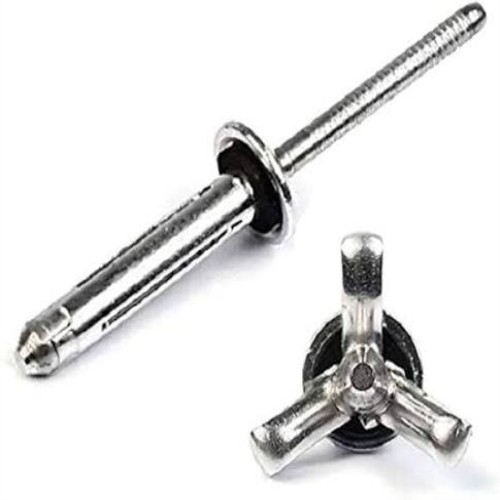
Explosive Rivet: An explosive rivet is a specialized type of blind rivet developed primarily during the mid 20th century to fasten materials where access to the back side is limited or completely inaccessible
exponent In mathematics, a number superscripted above and to the right of a base number. It indicates the power to which the base number is to be multiplied. In the example 23, the base number is 2 while the exponent is 3. This is stated as two cubed (or two to the third power) and is shown as 2 X 2 X 2 = 8.
extend To move away from the normal or closed position. When landing gear is extended, it is moved from its retracted position to the gear down position. Flaps can be extended from their stowed position to full extension or to some point in between.
extended over-water operation 1. With respect to aircraft other than helicopters, an operation over water at a horizontal distance of more than 50 nautical miles from the nearest shoreline. 2. With respect to helicopters, an operation over water at a horizontal distance of more than 50 nautical miles from the nearest shoreline and more than 50 nautical miles from an off-shore heliport structure.
extension lines The lines on a technical drawing that extend from a view for the purpose of identifying a dimension.
extent of damage An amount of damage sustained by a unit of equipment.
exterior angle The angle between one of the sides of a polygon and an extension to an adjacent side.
exterior view A view of an object showing only its outer or visible surfaces.
external combustion engine A heat engine in which the chemical energy in the fuel is converted into heat energy released to the outside of the engine. Heating water to produce steam that is put to mechanical use is a form of an external combustion engine.
external inspection A visual inspection done externally to the airframe, engine, or unit component without having to inspect the internal mechanism by disassembly.
external load A load that is carried or extends outside of an aircraft.
external resources Many potential resources exist outside the cockpit such as air traffic controllers, maintenance technicians, and flight service personnel.
external tooth lock washer A thin, spring steel, shake-proof lock washer with twisted teeth around its outside circumference that holds pressure between the head of a screw or bolt and the metal surface to prevent the fastener from loosening.
external-control surface locks The locks applied on the exterior of the control surfaces of a parked aircraft to prevent movement in windy conditions.
external-load attaching The structural components used to attach an external load to an aircraft, including external-load containers, the backup structure at the attachment points, and any quick-release device used to jettison the external load.
extinguishing agent The agent used in a fire extinguishing system to either cool the fuel below its kindling point or to exclude oxygen from the surface of the fire.
extra-flexible control cable A special metal cable flexible enough to pass around pulleys. It consists of seven strands of wire with 19 wires in each strand.
extratropical cyclone A macroscale low-pressure disturbance that develops outside the tropics.

Extrude: Extrude means to thrust, push, or force something out. Depending on the context, it refers to a manufacturing process, a 3D modeling technique, or a biological function
extrusion A strip of metal, usually of aluminum or magnesium, that has been forced through a die in its plastic state. This can produce complex cross-sectional shapes required for modern aircraft construction.
eye 1. The hole of an eyebolt. 2. In meteorology, the roughly circular area of calm or relatively light winds and comparatively fair weather at the center of a well-developed tropical cyclone. A wall cloud marks the outer boundary of the eye.
eye wall The cloudy region embedded with cumulonimbus (CB) clouds immediately adjacent to the eye of an intense tropical cyclone.
eyebolt A bolt that has a flattened head with a hole in it. An eyebolt is used to attach a cable to a structure.
eyebrow lights Small shielded lights positioned over the top corners of an instrument on an aircraft instrument panel. The lights illuminate the dials of the instrument, but they do not shine in the eyes of the pilot.
eyelet A flanged tubular fastener designed for securing by curling or splaying the end.