Alpha
Bismillah
Charlie Delta
Echo
Foxtrot
Golf
Hotel
insaallah Juliett
Kilo
Lima
Mike
November
Oscar
Piaggio Quebec Romeo
Sierra Turks Uniform
Victory Water X-ray
Yankee Zulu MainPage
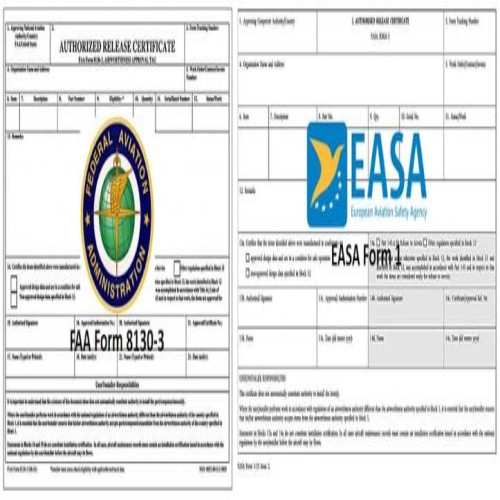
FAA FORMS
FAA air carrier operations specifications
Document issued to users operating under Federal Aviation Administration Regulations (FAR) Parts 121, 125, 127, 129, and 135. Operations Specifications are established and formalized by FARs. The primary purpose of FAA Air Carrier Operations Specifications is to provide a legally enforceable means of prescribing an authorization, limitation and/or procedures for a specific operator. Operations Specifications are subject to expeditious changes. These changes are usually too time critical to adopt through the regulatory process.FAA Form 337 Major Repair and Alteration Form.
FAA Form 8500-8 Application for airman medical certificate, or airman medical and student pilot certificate.
FAA Form 8710-1 Application for an airman certificate and/or rating.
FAA-approved data Data that can be used as authorization for the techniques or procedures necessary to make a repair or an alteration to a certificated aircraft. Approved data can consist of documents such as Manufacturer s Service Bulletins, Manufacturer s kit instructions, Airworthiness Directives, or specific details of a repair issued by the engineering department of the manufacturer.
FAA-PMA The identifying letters required on an aircraft part or component to signify it as being manufactured under a Federal Aviation Administration Parts Manufacturing Approval.
fabric Individual fibers woven together to produce cloth. Unidirectional or matted fibers may be included in this classification.
fabric material A cloth used to cover aircraft structures. The basic fabric is Grade-A long staple cotton, but Irish linen is sometimes used interchangeably. Synthetic fabrics made of polyester resins and specially treated glass fibers also can be used in place of cotton.
fabric punch test A test performed to measure the condition of fabric covering material on fabric-covered aircraft. The tester determines fabric condition by measuring the resistance of the fabric to a sharp punch pressed against the fabric until it pierces.
fabric punch tester A hand tester used to give an indication of the relative strength of aircraft fabric. It measures the force required to press a specially shaped pointed plunger a specific distance into the fabric.
fabric repair The repair made to a fabric-covered structure that produces the same strength and tautness in the fabric as it originally had.
fabric warp face That side of a woven fabric on which the greatest number of yarns are parallel to the selvage.
fabricate To construct or build something.
fabrication The assembling of parts to make a complete unit or a structure.
face of a propeller The flat side of a propeller blade.
face of the drawing The surface of an object as seen from the front view.
face shield A transparent protective guard covering the entire face to protect against flying objects or liquid spray.
face-end spanner A type of semicircular, open-end wrench having short pins extending from its face and used to turn special circular type nuts.
faceplate, lathe Used for turning metal. A heavy, steel disk with a smooth face mounted on the headstock of the lathe and is turned by it.
face-to-face bearings Bearing sets installed in such a way that one set carries thrust loads in one direction while the other bearing set carries thrust loads in the opposite direction.
facing A machining operation on the end, flat face, or shoulder of a part.
facsimile A copy of a document that is transmitted over telephone lines or radio waves by a facsimile machine to be recreated by a facsimile machine at the other end. Also referred to as a fax.
factor of safety The ratio of the ultimate strength of a member to the probable maximum load. This ratio is larger than one.
fading 1. A decrease in the friction applied by a drum-type brake when it is hot. As the drum is heated, it expands in a bellmouth fashion and part of it moves away from the lining. This decreases the friction area and causes a loss of breaking action. 2. A decrease in strength of a received radio signal.
fahnstock clip An electrical type of spring clip connector used to temporarily connect a wire to an electrical circuit.
Fahrenheit (F) A temperature scale on which pure water freezes at 32 and boils under standard atmospheric pressure conditions at 212 .
fail hardover A failure of an automatic flight control system in which a steady signal is produced that drives the controls to the extreme end of their travel and holds them there.
fail-safe A design feature that transmits the loads into a secondary portion of the structure in the event of the primary structure failure.
fail-safe control A type of control that automatically puts the controlled device in a safe condition if the control system should fail.
faired curve A smoothly curved object.
fairing A smooth covering over a joint or a junction in an aircraft structure to provide a smooth surface for the airflow. Its primary purpose is to reduce drag.
fairlead Wood or plastic guides for aircraft control cable, used to hold straight runs of cable away from the structure.
fallstreaks Ice crystals that descend from cirrus clouds.
false rib Short, semi-rib extending from the spar to the leading edge of the wing. It is used to give rigidity and better shape to the leading edge of fabric covered wings.
false spar A partial spar in an aircraft wing to which the aileron hinges attach.
false start A condition in starting a turbine engine in which ignition occurs but the RPM will not increase. This condition is usually caused by the engine not being turned fast enough by the starter when ignition occurs.
fan A feature of some turbojet engines. It is, in effect, a ducted, multi-bladed propeller driven by a gas turbine engine. It can be constructed as an extension of some of the turbine blades (aft fan), but it is more commonly an extension of compressor blades or powered by gears from the compressor or turbine sections (forward fan). These fans pull large volumes of air around the outside of the gas generator portion of the engine.
fan air The portion of airflow through a turbofan engine that is acted upon by the fan stages of the compressor.
fan marker An aircraft directional radio signal transmitted vertically upward from a transmitter located along a navigational radio range. It is heard only when the aircraft is directly over the transmitter.
Farad (f) The basic unit of capacitance. A capacitor of one farad will hold one coulomb (6.28 x 10¹⁸ electrons) under a pressure of one volt.
Faraday s law of electrolysis The amount of chemical change produced by current during electrolysis is proportional to the quantity of electricity used.
Faraday s law of electromagnetic induction When there is relative motion between a conductor and a magnetic field, or when there is a change in magnitude of the magnetic field, electrons are induced to flow through the conductor.
fast file A system whereby a pilot files a flight plan via telephone that is tape recorded and then transcribed for transmission to the appropriate air traffic facility. Locations having a fast file capability are contained in the Airport/Facility Directory. (Refer to AIM)
fastener A device such as a rivet, screw, or bolt used to fasten two objects together.
fatigue The weakening and eventual failure of a metal due to continued reversal or repeated stresses beyond the fatigue limit.
fatigue crack A crack in a structural member caused by flexing or vibration.
fatigue failure The failure of a material due to flexing or vibration.
fatigue limit The amount of flexing or vibration a body can withstand before fatigue failure occurs.
fatigue resistance The property that enables a metal to withstand repeated loads or reversals of loads and vibrations.
fatigue strength The ability of a material to withstand vibration and flexing.
fault A defect in an electrical circuit.
fault tree A chart used to determine the possible causes of some undesired event. The chart includes the undesired occurrence with the possible causes listed below it. A fault tree is also referred to as a logic chart since the branches of the tree are connected through the use of logic gates.
faying strip The strip along the edge of a sheet metal skin where a lap joint is formed. This inaccessible area is highly susceptible to the formation of corrosion.
faying surface The overlapping area of adjoining surfaces.
FDC NOTAM A NOTAM issued by the National Flight Data Center which contains information of a regulatory nature such as temporary flight restrictions or amendments to instrument approach procedures and other current aeronautical charts.
feather To change the angle of propeller blades so that the chords become approximately parallel to the line of flight.
feather edge A very thin, sharp edge of a material. Susceptible to damage as a result of bending or breaking.
feathered propeller A propeller whose blades have been rotated so that the leading and trailing edges are nearly parallel with the aircraft flight path to stop or minimize drag and engine rotation. Normally used to indicate shutdown of a reciprocating or turboprop engine due to malfunction.
feathering In rotorcraft, the action that changes the pitch angle of the rotor blades by rotating them around their feathering (spanwise) axis.
feathering axis In rotorcraft, the axis about which the pitch angle of a rotor blade is varied. Sometimes referred to as the spanwise axis.
feathering propeller A controllable pitch propeller with a pitch range sufficient to allow the blades to be turned parallel to the line of flight. This reduces drag and helps prevent further damage to an engine that has been shut down after a malfunction.
feathering solenoid A locking, electrical solenoid used with a Hamilton Standard Hydromatic propeller. The solenoid keeps the feathering pump running after the feathering button has been momentarily depressed. The solenoid is de-energized when the propeller becomes fully feathered.
feathering switch Hydromatic propellers are standard equipment on certain models of airplanes, i.e., the D18C and D18C-T airplanes. These propellers are controlled by individual, single-acting, Hamilton Standard propeller governors, and feathering or unfeathering action is accomplished by individual, electric motor-driven pump feathering systems. The pumps are controlled by a feathering switch.
Federal Airways See Low Altitude Airway Structure.
Federal Aviation Administration (FAA) An organization within the Department of Transportation. The FAA establishes aviation rules and regulations as well as enforces those policies. The purpose of the FAA is to set the standards for civil aircraft in the interest of public safety.
Federal Aviation Regulations (FAR) The rules, regulations, and guidelines established by the FAA to govern the operation of aircraft, airways, airmen, and the safe operation of civil aircraft.
Federal Communications Commission (FCC) A government board, made up of seven commissioners, responsible for regulating all interstate electrical communications, including foreign communications that originate in the United States.
feedback 1. Another way to gauge whether students are receiving the correct message. Students must interpret and evaluate the information received and then respond. The transmission of evaluative or corrective information to the original or controlling source about an action, event, or process. 2. In rotorcraft, the transmittal of forces, which are initiated by aerodynamic action on rotor blades, to the cockpit controls. 3. A portion of the output signal of a circuit that is returned to the input. Positive feedback occurs when the feedback signal is in phase with the input signal. Negative feedback occurs when the feedback signal is out of phase with the input signal.
feeder fix The fix depicted on instrument approach procedure charts which establishes the starting point of the feeder route.
feeder route A route depicted on instrument approach procedure charts to designate routes for aircraft to proceed from the enroute structure to the initial approach fix (IAF).
feedthrough capacitor A capacitor used to block low frequencies while passing radio frequencies. Some magnetos use a feed-through capacitor to serve as the normal capacitor to minimize arcing of the points. They also decrease the amount of radio interference caused by electrical energy being radiated from the ignition switch lead.
feedthrough connector A connector used to carry a group of conductors through a bulkhead.
feel The feedback from a power-controlled flight control or brake system. This feel allows the pilot to sense how much pressure is needed for the operation of the system.
feeler gauge A measuring tool consisting of a series of precision ground steel blades of various thicknesses. It is used to determine the clearance or separation between parts.
fence A fixed vane that extends chordwise across the wing of an airplane. Fences prevent air from flowing along the span of the wing.
Fenwal spot-type fire detection system A fire detection system utilizing bimetallic thermal switches. A fire or overheat condition closes the switches and signals the presence of the fire or overheat.
ferrite A magnetic substance that consists of ferric oxide combined with the oxides of one or more metals. Ferrite has high magnetic permeability and high electrical resistance.
ferritic stainless steel Straight chromium carbon and low-alloy steels that are strongly magnetic.
ferromagnetic materials Magnetic materials composed largely of iron.
ferrous metal Iron or any alloy containing iron.
ferrule resistor A group of resistors that have metal bands (ferrules) around each end so that they can be mounted in standard fuse clips.
ferrule terminals The terminals on each end of a tubular fuse. Used for making connections with the circuit.
ferry The movement of an aircraft from one location to another.
ferry flight A flight for the purpose of returning an aircraft to base; delivering an aircraft from one location to another; or moving an aircraft to and from a maintenance base. Ferry flights, under certain conditions may be conducted under terms of a special flight permit.
ferry permit Commonly used name for Special Flight Permit. A Special Flight Permit issued by the FAA allows an unlicensed aircraft to be flown from one location to another location.
fiber A single strand of material, used as a reinforcement because of its high strength and stiffness.
fiber bridging In composites, reinforcing fiber material that bridges an inside-radius of a pultruded product. This condition is caused by shrinkage stresses around such a radius during cure.
fiber content The amount of fiber in a composite expressed as a ratio to the matrix. The most desirable fiber content is a 60:40 ratio. This means there is 60% fiber and 40% matrix material.
fiber direction or orientation In composites, the orientation of the fibers in a laminate to the 0 reference designated by the manufacturer.
fiber locknut A type of self-locking fastener with a fiber insert that puts pressure on the threads to lock the nut in place. This prevents the nut from turning when installed in areas subject to vibration.
fiber optics The transmission of light through a bundle of fiber rods. Often used in areas where light must be transmitted, but where it is inconvenient or dangerous to use electrical transmission. An optical device called a Borescope uses tiny glass rods that conduct light and vision to make inspection around corners practicable. Fiber optics are also used to transmit information from one electronic device to another.
fiber reinforced plastics (FRP) Term used interchangeably for advanced composites
fiberglass Extremely thin fibers of glass. May be woven into a cloth or lightly packed into a mat. Used to reinforce epoxy or polyester resin for aircraft structure.
fiberglass reinforcement In composites, fiberglass used as a reinforcement in a plastic matrix.
fidelity The degree of similarity between the input and output waveforms of an electronic circuit.
field A space in which magnetic or electric lines of force exist.
field coil Coil or winding used to produce a magnetic field.
field effect transistor (FET) A special form of semiconductor device with high input impedance. Electron flow between its source and drain is controlled by a voltage applied to the gate.
field elevation See Airport Elevation
field excitation DC supplied to the field of an alternator or generator to produce magnetic flux, which is cut by the conductors in the armature or stator.
field frame The main structure of a generator or motor on which field poles and windings are mounted.
field maintenance The maintenance performed on aircraft remotely or semi-remotely from the home station. Typically, there are few tools or equipment to implement normal maintenance procedures.
field strength 1. The intensity of the magnetic strength of a magnet or electromagnet. 2. The intensity of the electromagnetic field emanating from a radio transmitter antenna.
field strength meter An electrical instrument that measures the strength of an electromagnetic field radiating from a radio transmitting antenna.
filament 1. The heated element in a light bulb or electron tube. In an electron tube, the heat speeds up the molecular movement in the cathode that emits electrons. 2. The smallest unit of a fibrous material.
filament winding In composites, a manufacturing method in which long continuous fiber is wound around a mandrel to produce a structure.
file A hand-operated cutting tool made of high-carbon steel and fitted with rows of very shallow teeth extending diagonally across the width of the tool.
filed Normally used in conjunction with flight plans, meaning a flight plan has been submitted to ATC.
filed enroute delay Any of the following preplanned delays at points/areas along the route of flight which require special flight plan filing and handling techniques.
a. Terminal Area Delay. A delay within a terminal area for touch-and-go, low approach, or other terminal area activity.
b. Special Use Airspace Delay. A delay within a Military Operating Area, Restricted Area, Warning Area, or ATC Assigned Airspace.
c. Aerial Refueling Delay. A delay within an Aerial Refueling Track or Anchor.
filed flight plan The flight plan as filed with an ATS unit by the pilot or his designated representative without any subsequent changes or clearances.
files, classification The teeth on a file vary from very fine to coarse in the following sequence:
a. Dead-smooth cut
b. Smooth cut
c. Second cut
d. Bastard cut
e. Coarse cut
Files with a single set of cutting teeth are called single-cut files. A file that has a second set of cutting teeth crossing the first set is called a double-cut.
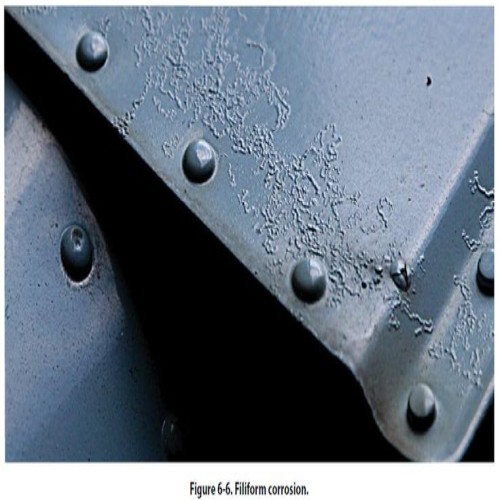
FILIFORM
filiform corrosion A thread- or filament-like corrosion that forms on aluminum skins beneath a covering of protective coating.
fill The direction across the width of fabric.
fill threads Threads running across the width of a piece of fabric from one selvage edge to the other. Also referred to as weft or woof threads.
filler In composites, material added to the mixed resin to increase viscosity, improve appearance, and lower the density and cost.
filler material Any material mixed or added to a base material in order to give body to the base material.
filler metal A metal used to increase the area of a weld. Normally supplied in the form of the welding rod or the electrode used in arc welding.
filler neck Usually, a cylinder-shaped neck or tube leading into a reservoir for replenishing fluids.
filler plug The plug installed in a sheet metal or wood structural repair to make the surface of the repair coincide with the original skin contour. The filler plug is used only to make the surface aerodynamically smooth. The strength of the repair comes from the doubler inside the structure.
filler ply In composites, an additional patch to fill in a depression in the repair, or to buildup an edge.
filler rod A thin metal rod or wire used in welding to provide the necessary filler metal. Used to provide additional strength to the weld.
filler valve A readily accessible valve that provides a means of servicing an installed oxygen, air, or fluid system.
fillet A rounded-out addition at the intersection of two plane surfaces to produce a smooth junction where the two surfaces meet. Fillets produce a smooth aerodynamic junction between the wing and the fuselage of an airplane.
filling An increase in the central pressure of a pressure system; opposite of deepening; more commonly applied to a low rather than a high.
fillister-head screw A machine screw whose shape consists of a rounded top surface, cylindrical sides, and a flat bearing surface.
film adhesive In composites, a synthetic resin adhesive, usually of the thermosetting type, in the form of a thin, dry film of resin.
film resistor A resistor formed by coating a ceramic, glass, or other insulating cylinder with a metal oxide or other thin resistive film.
film strength A lubricant s ability to maintain a continuous lubricating film under mechanical pressure without breaking down.
filter 1. A device for straining out unwanted solid particles in a fluid. 2. An electrical circuit arranged to pass certain frequencies while blocking all others. A high pass filter passes high frequencies and blocks low frequencies.
filter capacitor A low-impedance capacitor attached across the output of a DC power supply to filter any ripple to ground, leaving the DC untouched.
filter choke An inductor placed in series with the output of a DC power supply to reduce the amount of ripple while allowing the DC to pass.
filtering The separation of unwanted components from either a fluid flow or an electrical flow.
fin 1. The vertical stabilizer of an airplane to which the rudder is hinged. It produces directional stability. 2. A key under the head of a fastener that serves to keep the fastener from turning during assembly and use.
final Commonly used to mean that an aircraft is on the final approach course or is aligned with a landing area. (See Final Approach Course) (See Final Approach - IFR) (See Traffic Pattern) (See Segments of an Instrument Approach Procedure)
final approach A flight path of a landing aircraft in the direction of landing along the extended runway centerline from the base leg or straight in to the runway.
final approach - IFR (USA) The flight path of an aircraft which is inbound to an airport on a final instrument approach course, beginning at the final approach fix or point and extending to the airport or the point where a circle-to-land maneuver or a missed approach is executed.
final approach course A bearing/radial/track of an instrument approach leading to a runway or an extended runway centerline all without regard to distance.
final approach (ICAO) That part of an instrument approach procedure which commences at the specified final approach fix or point, or where such a fix or point is not specified, 1. at the end of the last procedure turn, base turn or inbound turn of a racetrack procedure, if specified; or 2. at the point of interception of the last track specified in the approach procedure; and ends at a point in the vicinity of an aerodrome from which: a. a landing can be made; or b. a missed approach procedure is initiated.
final approach point The point, applicable only to a nonprecision approach with no depicted FAF (such as an on-airport VOR), where the aircraft is established inbound on the final approach course from the procedure turn and where the final approach descent may be commenced. The FAP serves as the FAF and identifies the beginning of the final approach segment.
final approach point (FAP) (Australia) A specified point on the glide path of a precision instrument approach which identifies the commencement of the final segment. NOTE: The FAP is co-incident with the FAF of a localizer based non-precision approach.
final approach segment That segment of an instrument approach procedure in which alignment and descent for landing are accomplished.
final controller The controller providing information and final approach guidance during PAR and ASR approaches utilizing radar equipment. (See Radar Approach)
final monitor aid A high resolution color display that is equipped with the controller alert system hardware/ software which is used in the precision runway monitor (PRM) system. The display includes alert algorithms providing the target predictors, a color change alert when a target penetrates or is predicted to penetrate the no transgression zone (NTZ), a color change alert if the aircraft transponder becomes inoperative, synthesized voice alerts, digital mapping, and like features contained in the PRM system. (See Radar Approach)
final monitor controller Air Traffic Control Specialist assigned to radar monitor the flight path of aircraft during simultaneous parallel and simultaneous close parallel ILS approach operations. Each runway is assigned a final monitor controller during simultaneous parallel and simultaneous close parallel ILS approaches. Final monitor controllers shall utilize the Precision Runway Monitor (PRM) system during simultaneous close parallel ILS approaches.
fineness ratio The ratio of the length to the maximum diameter of a streamlined body such as an airship hull.
fine-wire spark plug A spark plug using platinum or iridium electrodes. The small electrodes allow the firing end cavity to be open resulting in better scavenging of the lead oxides from the plug. The heat transfer characteristics of the fine wires prevent their overheating.
finger brake A metal-forming machine similar to a leaf (cornice) brake. It is used to form all four sides of a box. The sides that have been bent up fit between the fingers of the clamp while the last bends are being made. Also referred to as a box brake.
finger patch A form of welded patch to go over a cluster in a steel tube fuselage. Fingers extend along all of the tubes in the cluster.
finger screen A finger-shaped filter screen used on fuel tank standpipes. Used to screen or filter out large pieces of contamination.
finish In composites, a material that is applied to the fabric after it is woven to improve the bond of the fiber to the resin system.
finish turning A final smoothing process in the machining of a metal part in which the part is turned to its correct dimension.
finite life The length of usefulness of a limited-life part. The part should not be used past the end of its predetermined operating life.
fire alarm relay A relay actuated by a fire detection system. Provides energy for the fire warning bell and the fire warning lights in the cockpit.
fire detection system A system in an aircraft that informs the pilot of a fire on board the aircraft.
fire extinguisher Any device containing an extinguishing agent used to either cool a material below its kindling point or to exclude oxygen from its surface.
fire extinguishing agent Any approved chemical used to extinguish a fire by either reducing the temperature of the fuel to a temperature that is below its kindling point or by excluding oxygen from the fire.
fire point The temperature at which the vapors given off by a substance will ignite and continue to burn when a flame is passed above it.
fire valve A valve that automatically shuts off the supply of combustion air to a combustion-type cabin heater in the event of a fire or overheat condition.
fire zone An area or region of an aircraft designated by the manufacturer to require fire detection, fire extinguishing equipment, and a high degree of inherent fire resistance.
fireproof The capacity to withstand the heat associated with fire without being destroyed.
fireproof structure A structure constructed of nonflammable materials.
fire-resistant structure A structure capable of resisting fire or exposure to high temperature for a specified period of time without being destroyed or structurally damaged.
firewall A fire-resistant bulkhead that must be installed between an engine compartment and the rest of the aircraft structure.
firewall shutoff valve A valve located on the airframe side of a firewall that will completely shut off the flow of fuel, oil, or hydraulic fluid to the engine during an engine fire.
firing order The order or sequence in which the cylinders of an internal combustion engine fire in a normal cycle of operation.
firing position The position of the piston in the cylinder of a reciprocating engine at the time ignition should occur. Igniting the mixture at this position allows the peak cylinder pressure to occur shortly after the piston passes top center.
firmer chisel A woodworking chisel that has a thin, flat blade.
firmware A computer program contained permanently in a computer. Usually contained in read-only memory (ROM).
first solo A student pilot may not operate an aircraft in solo flight unless that student has met the requirements of FAR Part 61. Solo flight, refers to the flight time that a student pilot is the solo occupant of the aircraft, or when the student performs the duties of a pilot in command of a gas balloon or airship requiring more than one pilot flight crewmember. First solo refers to the very first time a student embarks on a solo flight.
first tier center The ARTCC immediately adjacent to the impacted center.
first-class lever A lever in which the fulcrum or pivot point is positioned between two forces that act in opposite directions.
fisheyes Isolated areas on a surface that have rejected the material s finish because of wax or silicone contamination.
fishmouth splice A welded splice in steel tube structure in which one tube telescopes over the other. The outside tube is cut into a V, resembling an open fishmouth, to provide additional area for the weld.
fishtail A method no longer used to decrease the speed of an airplane on its approach for landing. Fishtailing consists of alternately skidding the airplane to the left and right by using the rudder while keeping the wings level with the control stick.
fissure A scratch or crack.
fit The range of tightness in the design of mating parts. Tightness of fit is the result of applying specific combinations of allowances and tolerances.
fitting A part used to join or attach assemblies together.
five-hour rating The ampere-hour rating of a battery that will discharge the battery in five hours. This is the most commonly used rating for aircraft batteries.
five-minute rating A rating of the ampere-hour capacity of batteries normally used to indicate the capacity of a battery for high current drains such as starting current. The five-minute rating of a battery is an indication of the way the battery will function under the severe loads required by the engine starter.
fix A geographical position determined by visual reference to the surface, by reference to one or more radio navaids, by celestial plotting, or by another navigational device. (Note, fix is a generic name for a geographical position and is referred to as a fix, waypoint, intersection, reporting point, etc.)
fix balancing A process whereby aircraft are evenly distributed over several available arrival fixes reducing delays and controller workload.
fixed The state of a permanently installed system in contrast to any type of portable equipment system.
fixed cowl flap Fixed or ground adjustable doors on the air exit of an aircraft engine cowling. The cylinder head temperature can be controlled by varying the amount the flaps are opened if ground adjustable.
fixed equipment Non-movable, attached equipment.
fixed landing gear Landing gear that is not retractable.
fixed tail surfaces Surfaces, mounted rigidly to the fuselage, that stabilize aircraft during takeoff, flights, and landing. Fixed tail surfaces also provide anchorage for the rudder and elevators. Often referred to as stabilizers.
fixed-base operator (FBO) An entrepreneur on an airfield that conducts business involved with general aviation. Often sells aviation fuel, aircraft and aircraft parts, aviation related goods, repairs aircraft, and conducts flying training.
fixed-pitch propellers Propellers with fixed blade angles. Fixed-pitch propellers are designed as climb propellers, cruise propellers, or standard propellers.
fixed-wing aircraft An airplane with rigidly attached wings, as distinguished from a helicopter or autogyro.
fixture A small jig or device for holding parts in the proper position for assembly.
flag A warning device incorporated in certain airborne navigation and flight instruments indicating that: 1. instruments are inoperative or otherwise not operating
flame out In gas turbine engines, an unintentional loss of combustion due to a blowout (too much fuel) or die-out (too little fuel).
flame spraying In flame spraying, molten metal is sprayed onto a base material. The combustion of a fuel gas is used to melt a metal. Melted particles are propelled toward the base material by a high-pressure gas where they are quenched very rapidly. This process allows a high wear resistant or high temperature resistant coating to be applied to a surface that normally does not have these characteristics.
flameout A condition in the operation of a gas turbine engine in which the fire in the engine goes out due to either too much or too little fuel sprayed into the combustors.
flameout pattern An approach normally conducted by a single-engine military aircraft experiencing loss or anticipating loss of engine power or control. The standard overhead approach starts at a relatively high altitude over a runway ( high key ) followed by a continuous 180 degree turn to a high, wide position ( low key ) followed by a continuous 180 degree turn final. The standard straight-in approach with a high rate of descent to the runway. Flameout approaches terminate in the type approach requested by the pilot (normally fullstop).
flammable Any material that will burn or support combustion.
flammable liquid Any liquid that gives off easily ignited, combustible vapors.
flange Any design of a machine, motor, or other mechanism having a ridge that sticks out from the device. It is generally used for attaching something to the device or for connecting two or more devices together.
flaperon A type of control used on airplanes that serves as both aileron and wing flap.
flapper valve A type of check valve that allows fluid to flow through it in the direction of flow, forcing the valve off of its seat. It does not allow fluid to flow in the opposite direction since this causes the flapper valve to close.
flapping In rotorcraft, the vertical movement of a blade about a flapping hinge.
flapping hinge In rotorcraft, the hinge that permits the rotor blade to flap and thus balance the lift generated by the advancing and retreating blades.
flaps Hinged portion of the trailing edge between the ailerons and fuselage. In some aircraft ailerons and flaps are interconnected to produce full-span flaperons. In either case, flaps change the lift and drag on the wing.
flare 1. A flight maneuver made by pulling back on the control wheel just before touchdown to reduce speed and settle the airplane onto the runway with the least amount of vertical speed. 2. A signal device that was, at one time, carried in most airplanes in the event of a crash landing. The flare was usually fired into the air from a specially designed gun and signaled the general location of the downed aircraft s position. 3. A 37 cone-shaped expansion at the end of a piece of tubing. A sleeve and nut are slipped over the tubing prior to using a special cone-shaped flaring tool to form the flare. 4. In rotorcraft, a maneuver accomplished prior to landing to slow down the aircraft.
flareless fitting A form of fluid line fitting used on some hydraulic lines. Instead of using a formed flare on the end of the tube, a compression sleeve is forced into the tube. A fluid-tight sealing surface is formed when the compression sleeve is tightened onto a recess in the attachment fitting.
flaring An operation used to expand the end of a length of tubing designed to produce a tight seal when coupled to another unit.
flaring block A split clamp, usually made of hardened steel, used to hold tubing while it is being flared.
flaring tool A split block with chamfered holes to clamp the various sizes of tubing while a hardened and polished cone is forced into the end of the tubing to form it against the chamfer.
flash The thin fin of metal along the sides or around the edges of a forged or upset section. It is caused when metal flows out between the edges of the forging dies.
flash line A raised line along the boundary of a cast part.
flash plating A very thin deposit of metal sufficient to give a solid color.
flash point The temperature at which a fluid will momentarily ignite (flash), but not sustain combustion when a small flame is passed above its surface.
flashback A malfunction in an oxyacetylene torch in which the gases burn inside the mixing head. Flashback is very dangerous and can cause an explosion unless the gases are immediately shut off at the regulator. This stops the fire inside the torch from burning back through the hoses to the supply tanks.
flasher mechanism An automatic electrical switching device used for the flashing operation of lights.
flashing off The drying process of a finish to which solvents have been added for proper spray paint viscosity.
flashing the field A procedure in which a battery is momentarily connected to the field coil of an aircraft DC generator. Current flows through it for a few seconds to make a permanent magnet of the field frame. This process restores the residual magnetism.
flashover A condition inside the distributor of a high-tension magneto in which the spark jumps the air gap to the wrong electrode. This may be caused by moisture inside the distributor or by a dirty distributor block.
flash-resistant Not susceptible to burning violently when ignited.
flat file A file slightly tapered toward the point in both width and thickness. Cuts on all sides. Double-cut on both sides and single-cut on both edges.
flat lacquer Any lacquer that dries with a non-glossy or flat finish.
flat machine tip Compressor or turbine blade tips that have a constant cross section, as opposed to a squeeler-tip or a shrouded-tip configuration.
flat rating A current means of referring to rated thrust at a specific temperature above Standard Day value.
flat spin A dangerous flight condition or flight maneuver in which the aircraft is yawing around the vertical axis with a pitch attitude approximately level with the horizon.
flat washer A flat, thin ring used under the head of a bolt or nut in order to protect the surface of the material from damage. Also referred to as a plain washer.
flat-compounded generator A generator that has both a series and a parallel winding. The series field is adjusted by a regulator to keep the output voltage of the generator constant from a no-load condition to the maximum load the generator can produce.
flathead pin A high-strength steel pin with a flat head on one end and a hole for a cotter pin on the other end. Used as a hinge for control surfaces or for attaching a cable to a control horn. Also referred to as a clevis pin. Clevis pins are designed to take shear loads only.
flathead rivet An AN442 rivet used for internal structure where the head of the rivet will not be exposed to the airstream. Flathead rivets are usually driven with an automatic riveting machine.
flatnose pliers Pliers with deep, square jaws and a firm hinge, used to produce a sharp, neat bend in sheet metal and to make flanges along the edge of a part.
fleet weight The average weight of several aircraft of the same model and with the same equipment. This weight may be used for weight and balance calculations by FAR Part 121 and 135 operators.
flex hose The colloquial term for flexible tubing used in an aircraft plumbing system to allow relative movement between the two ends of the hose.
flexibility A material characteristic that allows it to be repeatedly bent, stretched, or twisted within its elastic limits and still return to its original condition each time the bending, stretching, or twisting force is removed.
flexible control cable A steel aircraft control cable consisting of seven strands of steel wire, each strand having seven separate wires. Also referred to as seven-by-seven cable.

FLIGHT 1
flight 1. Travel through the air. An aircraft is considered to be in flight from the time it airplane departs from the ground until it lands. 2. To take flight physically, students may develop symptoms or ailments that give them acceptable excuses for avoiding lessons. More frequent than physical flights are mental flights, or daydreaming. Mental flight provides a simple escape from problems.
flight assist Help given to a pilot when the pilot takes the precaution of requesting assistance from Air Traffic Control (ATC). A flight assist report (FAA Form 7230-6) is filed by ATC personnel in order to help other pilots learn from the incident. This form is not used to initiate enforcement action.
flight check A call-sign prefix used by FAA aircraft engaged in flight inspection/certification of navigational aids and flight procedures. The word recorded may be added as a suffix; e. g, Flight Check 320 recorded to indicate that an automated flight inspection is in progress in terminal areas. (See Flight Inspection) (Refer to AIM)
flight control surfaces The movable airfoils used to change the attitude of the aircraft in flight.
flight controller The command unit of an autopilot system. It is manually operated to generate signals that cause the aircraft to climb, descend, or perform coordinated turns.
flight deck The area in an aircraft that houses all of the occupants who fly the aircraft, along with all of the controls used in flight. It includes the flight stations for the pilot, copilot, flight engineer, navigator, and radio operator as required.
flight director system A form of automatic flight control in which all of the information is displayed to the pilot rather than being used to actuate control servos.
flight engineer The member of the flight crew responsible for the mechanical operation of the aircraft in flight.
flight following See traffic advisories.
flight following A radar traffic information service which routinely provides traffic information for IFR aircraft. However, when available, VFR aircraft may request flight following and be alerted, by ATC, to air traffic which is relevant to the flight.
flight idle Engine speed, usually in the 70% to 80% range, for minimum flight thrust.
flight information region An airspace of defined dimensions within which Flight Information Service and Alerting Service are provided.
a. Flight Information Service A service provided for the purpose of giving advice and information useful for the safe and efficient conduct of flights.
b. Alerting Service A service provided to notify appropriate organizations regarding aircraft in need of search and rescue aid, and to assist such organizations as required.
flight inspection Inflight investigation and evaluation of a navigational aid to determine whether it meets established tolerances. (See Navigational Aid) (See Flight Check)
flight instructor refresher course (FIRC) An educational seminar for flight instructors, which consists of ground training or flight training or a combination of both. The FIRC must be completed within the 3 calendar months preceding the expiration month of the current flight instructor certificate, and usually consists of at least 16 hours of ground and/or flight training.
flight level A level of constant atmospheric pressure related to a reference datum of 29.92 inches of mercury. Flight levels are stated in three digits, representing hundreds of feet. For example, flight level 250 represents a pressure altitude of 25,000 ft.
flight line 1. The area of an airfield where airplanes are parked. Also referred to as a ramp or tarmac. 2. A term used to describe the precise movement of a civil photogrammetric aircraft along a predetermined course(s), at a predetermined altitude, during the actual photographic run.
flight management system A computer system that uses a large data base to allow routes to be preprogrammed and fed into the system by means of a data loader. The system is constantly updated with respect to position accuracy by reference to conventional navigation aids. The sophisticated program and its associated data base insures that the most appropriate aids are automatically selected during the information update cycle.
flight management system procedure An arrival, departure, or approach procedure developed for use by aircraft with a slant E (/E) or slant F(/ F) equipment suffix.
flight manual Approved information that must be carried in an airplane. This includes the speeds, engine operating limits, and any other information vital to the pilot.
flight path A line, course, or track along which an aircraft is flying or intended to be flown.
flight plan Specified information relating to the intended flight of an aircraft that is filed orally or in writing with an FSS or an ATC Facility.
flight plan area The geographical area assigned by regional air traffic divisions to a flight service station for the purpose of search and rescue for VFR aircraft, issuance of notams, pilot briefing, in-flight services, broadcast, emergency services, flight data processing, international operations, and aviation weather services. Three letter identifiers are assigned to every flight service station.
flight recorder A general term applied to any instrument or device that records information about the performance of an aircraft in flight or about conditions encountered in flight. Flight recorders may make records of airspeed, outside air temperature, vertical acceleration, engine RPM, manifold pressure, and other pertinent variables for a given flight Housed in a crash-proof container, the flight recorder is used to determine the probable cause of any accident the aircraft should be involved in..
flight review An industry-managed, FAA monitored currency program designed to assess and update a pilot s knowledge and skills.
flight service stations Air traffic facilities which provide pilot briefing, enroute communications and VFR search and rescue services, assist lost aircraft and aircraft in emergency situations, relay ATC clearances, originate Notices to Airmen, broadcast aviation weather and NAS information, receive and process IFR flight plans, and monitor NAVAIDs. In addition, at selected locations, FSSs provide Enroute Flight Advisory Service (Flight Watch), take weather observations, issue airport advisories, and advise Customs and Immigration of transborder flights.
flight simulator A device that is a full-size aircraft cockpit replica of a specific type of aircraft, or make, model, and series of aircraft; includes the hardware and software necessary to represent the aircraft in ground operations and flight operations; uses a force cueing system that provides cues at least equivalent to those cues provided by a 3 degree freedom of motion system; uses a visual system that provides at least a 45 degree horizontal field of view and a 30 degree vertical field of view simultaneously for each pilot; and has been evaluated, qualified, and approved by the Administrator.
flight standards district office (FSDO) An FAA field office serving an assigned geographical area. Its staff of flight standards personnel serves the aviation industry and the general public on matters relating to the certification and operation of air carrier and general aviation aircraft. Activities include general surveillance of operational safety, certification of airmen and aircraft, accident prevention, investigation, and enforcement action, among other duties.
flight test A flight for the purpose of:
a. Investigating the operation/flight characteristics of an aircraft or aircraft component.
b. Evaluating an applicant for a pilot certificate or rating.
flight time The time from the moment an aircraft first moves under its own power for the purpose of flight until the moment it comes to rest at the next point of landing.
flight training devices (FTD) A full-size replica of the instruments, equipment, panels, and controls of an aircraft, or set of aircraft, in an open flight deck area or in an enclosed cockpit. A force (motion) cueing system or visual system is not required.
flight visibility The average forward horizontal distance, from the cockpit of an aircraft in flight, at which prominent unlighted objects can be seen and identified by day and prominent lighted objects can be seen and identified by night.
flight watch A shortened term for use in air-ground contacts to identify the flight service station providing Enroute Flight Advisory Service; e.g., Oakland Flight Watch.
flight-path angle The angle between the flight path of the aircraft and the horizontal.
flint lighter A flint and steel friction lighter used to ignite an oxyacetylene torch for welding.
FLIP Department of Defense
Flight Information Publications used for flight
planning, enroute, and terminal operations. FLIP is
produced by the National Imagery and Mapping Agency
(NIMA) for worldwide use. United States Government
Flight Information Publications (enroute charts and
instrument approach procedure charts) are incorporated
in DOD FLIP for use in the National
flip-flop An electronic device capable of assuming either of two stable states. Term used to describe a communications radio set up with two frequencies entered and the pilot is able to switch back and forth (flip-flop) between them.
float charging potential A charging potential that can be left connected across the poles of a chemical cell on standby service without damage or destructive overcharge. For a lead-acid battery, this potential is about 14.2 volts for a 12 volt battery.
floated battery A permanently installed storage battery positioned across the output of a generator. The generator carries the normal electrical load and keeps the battery fully charged at all times.
floating ground A ground not attached directly to an earth ground. See also chassis ground or equipment ground.
floating waypoint An airspace fix at a point in space not directly associated with a conventional airway. In many cases, it may be established for such purposes as an ATC metering fix, holding point, RNAV-direct routing, gateway waypoint, STAR origination point leaving the enroute structure, and SID terminating point joining the enroute structure.
float-type carburetor A fuel metering device which that a float-operated needle valve to maintain a constant fuel metering pressure or head.
flock Pulverized wool or cotton fibers attached to screen wire used as an air filter. The flock-covered screen is lightly oiled to prevent dirt and dust from entering the engine.
flood valve A control valve used to direct the flow of extinguishing agent in a CO2 fire extinguisher system.
flow control Measures designed to adjust the flow of traffic into a given airspace, along a given route, or bound for a given aerodrome (airport) so as to ensure the most effective utilization of the airspace. (See Quota Flow Control)
flow control valve A valve that controls the direction or amount of fluid flow.
flow indicator A device in an oxygen system that provides users with a positive indication that oxygen is flowing.
flow meter An autosyn electrical transmitter that provides a signal to a cockpit instrument. This indicator shows pounds per hour of fuel flow being consumed by an operating engine.
flow reverser A mechanical device placed in the tail pipe of a turbojet engine to deflect the exhaust gases forward. This decreases the aircraft landing roll.
flowchart A diagram that uses symbols connected by lines to indicate the sequence of steps that must be followed in order to achieve a desired end result.
fluctuate 1. The swing or oscillation of a dial from low to high. 2. To continually change or vary in an irregular way.
fluctuating arc A malfunction in an inert-gas arc welding system caused by improper grounding.
fluid 1. A substance, either gaseous or liquid, that will conform to the shape of the container that holds it. A gaseous fluid will expand to fill the entire container, while a liquid fluid will fill only the lower part of the container. 2. Any material whose molecules are able to flow past one another without destroying itself. Gases and liquids are both fluids.
fluid mechanics The science and technology of forces produced by fluids.
fluid ounce A liquid volume equal to 1/16 liquid pint or 1.8 cu. in.
fluid power The transmission of force by the movement of a fluid. The best examples are hydraulics and pneumatics.
fluidics The branch of science that studies the various shapes of ducts to sense, measure, and control physical conditions.
fluidity The ability of a liquid or gas to flow easily and smoothly.
fluorescent A substance that will glow or fluoresce when excited. Some types of dye penetrant material use fluorescent dyes, which can be observed under ultraviolet light.
fluorescent finish A highly light-reflecting aircraft finish.
fluorescent lamp A lamp that emits light as the result of the glowing of a fluorescent coating on the inside surface of a tube rather than from the glowing of an incandescent filament.
fluorescent penetrant inspection A form of nondestructive inspection in which a part is thoroughly cleaned and immersed in a vat of penetrating oil. When the part has soaked for a sufficient time, it is removed and the oil is washed from the surface and the part is dried. The part is then covered with a developer that draws the oil out from any crack into which it may have seeped. The part is inspected under ultraviolet light, which causes the crack to appear as a vivid green line.
fluorine A gaseous element with the symbol F and an atomic number of 9.
fluoroscope An instrument used for observing the internal structure of an object by means of X rays.
flush To clean, wash, or empty out with a sudden flow of solvent or other cleaning agent.
flush patch A type of sheet metal repair that leaves a smooth surface maintaining the skin s original contour. The repair is reinforced on the inside and the damaged area is filled with a plug patch.
flush repairs Metal repairs designed to maintain an aircraft s skin original contour.
flush rivet A countersunk rivet in which the manufactured head is flush with the surface of the metal when it is properly driven.
flush riveting Riveting using countersunk-head rivets. Produces a perfectly smooth outside skin.
flute A groove that is cut or formed in a material.
flutes Spiral-cut grooves in a drill bit that extend from the point to the shank and allow chips to move from the hole being drilled and for lubrication to flow to the cutting edges.
flutter The rapid and uncontrolled oscillation of a flight control resulting from an unbalanced surface. Flutter normally leads to a catastrophic failure of the structure.
flux 1. A material used in soldering, brazing, or welding to clean the surface of oxides and prevent oxides from forming. Helps ensure good adhesion or fusion of surfaces. 2. Magnetic lines of force.
flux density The number of lines of magnetic force per unit area.
flux valve A special transformer that develops a signal whose characteristics are determined by the unit s position in relation to the Earth s magnetic field. It is part of an Earth inductor compass system.
flux valve spider The framework around which the three pick-up coils of a flux valve are wound. The spider s highly permeable material accepts the lines of flux from the Earth s magnetic field.
fly To travel through the air as a pilot or passenger in an aircraft.
fly cutter A cutting tool used to cut round holes in sheet metal. It is turned by a drill press and the cutting is done by a tool bit held in an adjustable arm.
fly heading (degrees) Informs the pilot of the heading he should fly. The pilot may have to turn to, or continue on, a specific compass direction in order to comply with the instructions. The pilot is expected to turn in the shorter direction to the heading, unless otherwise instructed by ATC.
fly-by waypoint A fly-by waypoint requires the use of turn anticipation to avoid overshoot of the next flight segment.
fly-by-wire A system that moves aircraft controls by use of electro-mechanical servos and controls them by electrical signals from control inputs such as yoke, rudders, or autopilot. Control devices and servos are connected only by electrical wires with no mechanical linkage between them.
flying boat A form of seaplane whose fuselage serves as the boat hull.
flying wires Wires used to hold the wings in position during flight and landing loads. There are three types of flying wires: Standard flying wires keep the wing from moving upward during flight and go from the upper outer wing strut fitting to the lower portion of the fuselage. Landing wires go from the top of the inner cabin strut down to the lower outer wing fitting near the location of the bottom attach fittings of the N strut and keep the wing from flexing downward on landing loads. Drag wires go from the firewall to the top of the wing strut area and keep the wings from pivoting rearward due to the air drag. Flying wires are also used to reinforce the attachment of the vertical fin and stabilizer to the fuselage.
fly-over waypoint A fly-over waypoint precludes any turn until the waypoint is overflown and is followed by an intercept maneuver of the next flight segment.
fly-over waypoint A fly-over waypoint precludes any turn until the waypoint is overflown and is followed by an intercept maneuver of the next flight segment.
flyweights The L-shaped speed sensing units pivoted on the outer edges of a rotating disc. When rotational speed is high enough, centrifugal force moves them to an angular position. This motion is utilized for various applications, including propeller governors and mechanical tachometers.
flywheel A heavy wheel or weight used to smooth out the pulsations in a drive system.
flywheel effect In electronics, a parallel LC circuit that permits a continuing flow of current even though only small pulses of energy are applied to the circuit.
foam rubber A form of rubber containing millions of tiny air bubbles beaten into the latex before being vulcanized
foamed plastic A synthetic resin filled with millions of tiny bubbles. Foamed plastics are characteristically light weight and resilient. Also referred to as expanded plastic.
foaming An undesirable condition in a lubrication system in which oil passing through the engine picks up air, causing tiny air bubbles to form in the oil. Oil foaming reduces the ability of the oil to lubricate and to absorb heat as it should.
Foehn A warm, dry, downslope wind, the warmness and dryness being due to adiabatic compression upon descent; characteristic of mountainous regions. See adiabatic process, Chinook, Santa Ana.
fog Cloud consisting of numerous minute water droplets and based at the surface; droplets are small enough to be suspended in the earth s atmosphere indefinitely. (Unlike drizzle, it does not fall to the surface; differs from cloud only in that a cloud is not based at the surface; distinguished from haze by its wetness and gray color.)
fogger oil jet An air and oil spray mist device used on some engines for lubricating main bearings as opposed to a fluid stream-type oil jet.
foil A form of metal such as that used in common household aluminum foil that has been rolled out into very thin sheets.
folded fell seam A type of machine-sewn seam recommended for use in sewing aircraft fabric.
folding To make sharp, angular bends in sheets of material.
follow-up question In the guided discussion method, a question used by an instructor to get the discussion back on track or to get the students to explain something more thoroughly.
foot-pound (ft-lb) 1. A unit of work: One pound of force moved through a distance of one foot. 2. A unit of torque: The amount of torque produced when a force of one pound is applied one foot from the pivot point.
foot-candle The unit of luminance on a surface that is one foot from a uniform point source of light of one candle. Equal to one lumen per square foot. In science, the lux, one lumen per square meter, is in more common usage.
force The energy applied to an object that attempts to cause the object to change its direction, speed, or motion.
forced exhaust mixer A long duct design for a turbofan that causes fan air and hot exhaust streams to mix. Used for sound attenuation primarily. Also referred to as mixed exhaust.
forced landing Any landing necessitated by a malfunction of the aircraft, engine, or improper flight planning.
forceps A small tool used to grasp or hold things.
foreflap The first flap in a triple-slotted segmented flap.
foreign object damage (FOD) Internal gas turbine engine damage that occurs from the injection of foreign objects into the engine. FOD includes ground debris or objects in the air such as birds or flying debris.
foreign particle A material or particle that can cause serious damage or contamination if it enters a fluid system.
forge A method of forming metal parts by heating the metal to a plastic state (nearly, but not quite melted) and hammering it to shape.
forge welding The joining of metal by forging.
forging The process of forming a product by hammering or pressing. When the material is forged below the recrystallization temperature, it is said to be cold forged. When worked above the recrystallization temperature, it is said to be hot forged.
fork lift A steerable machine with two long steel fingers that can be positioned under a pallet for lifting and moving heavy loads.
form drag Skin friction caused by turbulence induced by the shape of the aircraft.
form factor The ratio of the length of a wire coil to its diameter.
form of thread In threaded fasteners, the profile of a thread in an axial plane for a length of one pitch.
formal lecture An oral presentation where the purpose is to inform, persuade, or entertain with little or no verbal participation by the listeners.
formation flight More than one aircraft which, by prior arrangement between the pilots, operate as a single aircraft with regard to navigation and position reporting. Separation between aircraft within the formation is the responsibility of the flight leader and the pilots of the other aircraft in the flight. This includes transition periods when aircraft within the formation are maneuvering to attain separation from each other to effect individual control and during join-up and breakaway.
a. A standard formation is one in which a proximity of no more than 1 mile laterally or longitudinally and within 100 feet vertically from the flight leader is maintained by each wingman.
b. Nonstandard formations are those operating under any of the following conditions:
1. When the flight leader has requested and ATC has approved other than standard formation dimensions.
2. When operating within an authorized altitude reservation (ALTRV) or under the provisions of a letter of agreement.
3. When the operations are conducted in airspace specifically designed for a special activity. (See Altitude Reservation) (Refer to FAR 91)
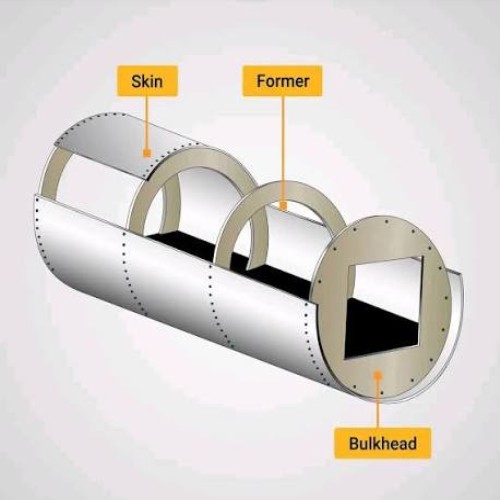
FORMER
former A frame of light wood or metal that attaches to the truss of the fuselage or wing in order to provide the required aerodynamic shape.
forming The process of shaping a part.
forming block A block, usually made of hardwood, around which metal parts are formed.
forming machine A hand-operated or power-driven machine used to shape sheet metal.
forward bias The polarity relationship between a power supply and a semiconductor that allows conduction.
forward center of gravity limit The most forward location allowed for the center of gravity of an aircraft in its loaded condition.
forward current The amount of current that flows through a semiconductor device when it is forward-biased.
forward fan Turbofan with the fan located at the front of the compressor. It can be a part of the compressor or a separate rotor.
forward slip A slide used to dissipate altitude without increasing the glider s speed, particularly in gliders without flaps or with inoperative spoilers.
fossil fuels Lubricants, fuels, and other petroleum products derived from oil extracted from the Earth.
fouled spark plug The condition of the spark plug electrodes when they are contaminated with foreign matter. This condition provides a conductive path for the high voltage to leak off to ground rather than building up enough potential to jump the electrode gap.
four-harness satin A fabric weave. Also called crowfoot satin because the weaving pattern resembles the imprint of a crow s foot. In this type of weave there is a three-by-one interlacing.
four-stroke engine The four-stroke, five-event cycle consists of five separate mechanical processes occurring in the following order: First, the intake stroke, in which the piston moves inward with the intake valve open. Second, the compression stroke when the piston moves outward with both valves closed. Third, ignition occurs near the top of the compression stroke. Fourth, the power stroke is an inward stroke of the piston with both valves closed, and finally, the exhaust stroke occurs when the piston moves outward with the exhaust valve open. At this point, the cycle begins again.
Fowler flap Wing flaps that are lowered by sliding from the trailing edge of the wing on a track. Fowler flaps modify the shape of the airfoil and increase the area of the wing.
fractional distillation A process of oil refining in which the crude oil is heated to the boiling point. As each type of hydrocarbon rises through the distillation column, the heavier components begin to cool and condense into liquids. Lighter fractions such as propane and butane continue to rise and condense later. As a result, different fractions are separated by a process of condensing, or distilling, at different temperatures.
fractions The various components of a hydrocarbon fuel separated by the distillation process.
frame A former ring that provides shape and rigidity to a semi-monocoque or monocoque structure.
free balloon A lighter-than-air, helium-filled device used in weather observations to find the height of the base of the lower layer of clouds.
free electrons Those electrons so loosely bound in the outer shells of some atoms that they are able to move
free fit A loose fit between moving parts such as a nut that turns easily on the threads of a screw or bolt.
free power turbine In gas turbine engines, a turbine wheel which drives a power output gearbox rather than a compressor. Found in Turboprop and Turboshaft engines.
free turbine A turboshaft engine with no physical connection between the compressor and power output shaft.
free water Liquid water that has condensed out and is no longer entrained in a turbine engine fuel.
free-air wire A wire completely open to air circulation and not in a bundle.
free-running multivibrator An oscillator that alternates between two different output voltage levels during the time it is on. The output remains at each voltage level for a definite period of time. Produces a continuous square or rectangular waveform. The free-running multivibrator has two outputs, but no inputs. Also referred to as an astable multivibrator.
freewheeling unit In rotorcraft, a component of the transmission or power train that automatically disconnects the main rotor from the engine when the engine stops or slows below the equivalent rotor r.p.m.
freeze 1. The process in which a liquid changes into a solid due to the removal of heat energy. 2. The stoppage of a mechanical device due to binding of the mechanical mechanism.
freeze calculated landing time A dynamic parameter number of minutes prior to the meter fix calculated time of arrival for each aircraft when the TCLT is frozen and becomes an ACLT (i.e., the VTA is updated and consequently the TCLT is modified as appropriate until FCLT minutes prior to meter fix calculated time of arrival, at which time updating is suspended and an ACLT and a frozen meter fix crossing time (MFT) is assigned).
freeze speed parameter A speed adapted for each aircraft to determine fast and slow aircraft. Fast aircraft freeze on parameter FCLT and slow aircraft freeze on parameter MLDI.
freeze/frozen Terms used in referring to arrivals which have been assigned ACLT s and to the lists in which they are displayed.
freezing Change of state from liquid to solid.
freezing drizzle Drizzle that freezes on contact.
freezing level A level in the atmosphere at which the temperature is 32 F (0 C).
freezing level chart A chart depiction of the freezing levels, reported in hundreds of feet.
freezing point The temperature at which a liquid will change into a solid.
freezing rain Rain that freezes upon contact with the ground or other objects, such as trees, power lines and aircraft.
French fell seam A type of machine-sewn seam. Recommended for sewing together sheets of aircraft fabric.
Freon A fluorinated hydrocarbon compound used as a fire extinguishing agent or a refrigerant for vapor-cycle air conditioning systems. A registered trademark of E.I. DuPont de Nemours & Company.
frequency The number of waves that pass some fixed point in a given time interval, measured in cycles per second (cps) or Hertz (Hz).
frequency converter A circuit device that changes the frequency of an alternating current.
frequency meter An electronic instrument that measures and indicates the frequency of an alternating current on a dial or digital display.
frequency modulation (FM) A radio wave transmission method where information is transmitted by varying the modulation signal in proportion to the audio signal.
frequency multiplier Circuit designed to double, triple, or quadruple the frequency of a signal by harmonic conversion.
frequency synthesizer An electronic circuit used to produce AC with an accurately controlled frequency.
fresh annual inspection An annual inspection recently performed on an airplane. Sometimes this is used as a selling point for an airplane. The skill and integrity of the person performing the inspection determines the value in a purchase situation.
freshening charge The charge given a dry-charged battery to bring it up to its rated capacity.
fretting Surface erosion caused by a slight movement between two overlapping parts.
fretting corrosion Corrosion damage between parts that are allowed to rub together. The rubbing removes the protective oxide films and allows the metals to corrode.
friction The force that resists the relative motion of two bodies in contact.
friction brake Any of a number of different mechanisms used with a rotating wheel or shaft in which friction is used to slow its rotation.
friction clutch A mechanism used to connect a motor to a mechanical load.
friction damper A rubber insert used to limit excessive movement in a pedestal-type dynafocal engine mount.
friction error, instrument The error caused by friction in an instrument mechanism.
friction horsepower The amount of horsepower required to turn the engine against the friction of the moving parts and to compress the charges in the cylinders.
friction loss The loss of mechanical energy in a device caused by the friction that is incidental to changing mechanical energy into heat.
friction mean effective pressure (FMEP) The average working pressure within an engine used to overcome friction. IMEP - BMEP = FMEP (IMEP is Indicated Mean Effective Pressure and BMEP is Brake Mean Effective Pressure).
friction measurement A measurement of the friction characteristics of the runway pavement surface using continuous self-watering friction measurement equipment in accordance with the specifications, procedures and schedules contained in AC 150/5320-12, Measurement, Construction, and Maintenance of Skid-Resistant Airport Pavement Surfaces.
friction stir welding A new technology welding method that joins materials by plasticizing and consolidating them along the weld line. The process involves a rotating pin forced down into the seam between two sheets of metal. The pin continues rotating and moves forward in the direction of welding. As the pin proceeds, the friction heats the surrounding material producing a plasticized area around the pin As the pin moves along the seam, the plasticized material consolidates behind the pin and cools to form a bond. No melting occurs and the weld is left in a fine-grained condition with none of the oxide and gas entrapment problems of more conventional welds.
friction tape Cloth, electrical, insulating tape impregnated with a black tar-like material.
friction welding A method of joining materials by vigorously rubbing one mating surface against another while forcing them together with a large amount of pressure.
friction-lock Cherry rivet A patented blind rivet made by Cherry Rivet, a division of Textron Inc., in which the stem locks in the hollow shank by friction.
Frise-type ailerons An aileron having the nose portion projecting ahead of the hinge line. When the trailing edge of the aileron moves up, the nose projects below the wing s lower surface and produces some parasite drag, decreasing the amount of adverse yaw.
front The boundary between two different airmasses.
front spar The foremost spar of a multispar wing.
frontal cyclone A low pressure area and associated counterclockwise winds (Northern Hemisphere) that develops on the polar front and moves west to east as a macroscale eddy embedded in the prevailing westerlies. Also called a frontal low or wave cyclone.
frontal lifting The lifting of a warm airmass over a relative cold airmass.
frontal wind shear The change of wind speed or direction per unit distance across a frontal zone.
frontal zone A narrow region of transition between two airmasses.
frost Ice crystal deposits formed by sublimation when temperature and dewpoint are below freezing.
frustrum The portion of a cone from which the top has been removed.
fuel A substance that, when combined with an oxidizer, will burn and produce heat.
fuel boost pump An auxiliary electrically operated pump located within a fuel tank to force the fuel from the tank to the engine. Usually a centrifugal-type pump. Provides vapor-free fuel with a slight head pressure to the main pump.
fuel cell The compartment in an aircraft where engine fuel is stored.
fuel consumption The actual amount of fuel consumed by an engine under a specified set of conditions. Fuel consumption can be expressed in either pounds per hour or gallons per hour.
fuel control unit In gas turbine engines, the main fuel scheduling device which receives a mechanical input signal from the power lever and various other signals, such as Pt2, Tt2, etc. These signals provide for automatic scheduling of fuel at all ambient conditions of ground and flight operation.
fuel dump system A portion of the fuel system of large jet transport aircraft that allows fuel to be dumped in flight. This is sometimes necessary to reduce the weight of the aircraft to below maximum landing weight or to minimize fuel in the event of an emergency landing.
fuel evaporation ice Ice
formed due to the cooling effect of the fuel
evaporating after it is sprayed into the induction
system of reciprocating engines. This evaporation
process causes carburetor and induction system parts
to become very cold and allows moisture in
fuel flow The rate at which fuel is consumed by the engine in pounds per hour (PPH) or gallons per hour (GPH).
fuel flowmeter A cockpit instrument used to indicate the rate of the fuel consumed by the engine during flight.
fuel grade A classification of aviation gasoline according to its anti-detonation characteristics.
fuel heater A radiator-like device that has fuel passing through its core. A heat exchange occurs to keep the fuel temperature above the freezing point of water. This keeps entrained water from forming ice crystals and blocking fuel flow.
fuel injection manifold valve A valve used in a fuel injection system that distributes fuel from the fuel control unit to the various injection nozzles. The valve provides a metering force for conditions of low fuel flow and a positive fuel shut off when the engine is shut down.
fuel injection system A fuel metering system used on some aircraft reciprocating engines utilizing a constant flow of fuel to the injection nozzles. Fuel injectors are located in the heads of all cylinders just outside of the intake valve. It differs from sequential fuel injection that uses a timed charge of high-pressure fuel sprayed directly into the combustion chamber of the cylinder.
fuel load That part of the useful load of an aircraft consisting of the usable fuel on board.
fuel manifold A pipe-like fitting that distributes fuel flow to the individual fuel injection nozzles. The manifold contains one single fuel line when used with single-line duplex nozzles and two lines for dual-line duplex nozzles.
fuel metering device Any apparatus such as a carburetor, fuel injector, or fuel control unit, that mixes fuel with intake air in the correct proportions and delivers the mixture to the engine.
fuel nozzle In gas turbine engines, a device used to spray fuel into a combustion liner. The two most common types are the atomizing nozzle and the vaporizing nozzle.
fuel nozzle ferrule The receptacle in the combustion liner of a gas-turbine engine where the fuel nozzle tip is inserted.
fuel pressure The pressure of fuel within a fuel system. The most common measurement location is at the point where fuel is delivered to the fuel control unit.
fuel pressure gauge A gauge that indicates the fuel pressure delivered to the carburetor.
fuel pump An electrical or engine-driven pump used to provide a positive volume of fuel under pressure to the engine.
fuel remaining A phrase used by either pilots or controllers when relating to the fuel remaining on board until actual fuel exhaustion. When transmitting such information in response to either a controller question or pilot initiated cautionary advisory to air traffic control, pilots will state the APPROXIMATE NUMBER OF MINUTES the flight can continue with the fuel remaining. All reserve fuel SHOULD BE INCLUDED in the time stated, as should an allowance for established fuel gauge system error.
fuel shut-off valve A valve in an aircraft fuel system that shuts off all fuel flow to the engine.
fuel siphoning Unintentional release of fuel caused by overflow, puncture, loose cap, etc.
fuel strainer A device that removes dirt, water, and other foreign particles from the fuel. It is usually located in the fuel tank outlets or at the lowest point of an aircraft s fuel system.
fuel system The system that stores fuel and delivers the proper amount of clean fuel at the right pressure to meet the demands of the engine.
fuel tank vent A vent in a fuel tank that allows the air pressure above the fuel to be the same as the surrounding air.
fuel venting See fuel siphoning
fuel-air combustion starter A fuel engine-starting accessory that utilizes a combustion section similar to a turbine engine. Combustion products are exhausted through a turbine connected to a reduction gearbox to create starting torque.
fuel-air mixture ratio The weight ratio in pounds of the fuel and air that are mixed together creating a combustible mixture to be burned in an engine.
fuel-oil cooler A heat exchange device that heats the fuel and cools the oil. It is a radiator-like unit. Fuel passes through the cores and oil passes around the cores. The oil flow is controlled by a thermostatic valve that routes the oil through the cooler only when a certain oil temperature is reached. On some engines, no fuel heater is required due to the exchange rate of this oil cooler.
fuel-oil heat exchanger A heat exchanging device used on turbine engines to take heat from the engine oil and put it into the fuel. It is a radiator-like unit directing fuel through the tubes that pass through the hot engine oil. Heat from the oil raises the fuel temperature, and at the same time, lowers the temperature of the oil.
fulcrum A point on which a lever is supported, balanced, or about which it turns.
full annealing A process used to produce a fine grained, soft, ductile metal without internal stresses or strains. To fully anneal a metal, the temperature of the metal is raised to its critical temperature followed by controlled cooling.
full fuel The amount of fuel in an aircraft when all fuel tanks are filled to the quantity called for in the aircraft specifications.
full oil The quantity of oil shown as oil capacity in aircraft specifications.
full rudder The movement of the rudder to its extreme limit.
full throw The full range of control surface travel.
full-register position The position of the rotating magnet in a magneto when the poles are fully aligned with the pole shoes of the magneto frame. At this point, the maximum number of lines of flux flow in the frame.
full-rich That position of the mixture control that allows the maximum amount of fuel to flow to the engine relative to air flow.
full-scale drawing A drawing of a part that is the same size as the part.
full-wave rectifier A form of rectifier that inverts one half of the input AC signal and provides a pulsating DC output having twice the frequency of the input alternating current.
fully articulated rotor A rotor that is attached to a helicopter rotor hub in such a way that the pitch angle of each blade can change, and each blade is free to move up and down and back and forth in its plane of rotation.
fumes Vaporized liquids.
functional check A check for proper operation of the aircraft and systems. Required before returning an aircraft to service after an annual or 100-hour inspection.
functional test A method of testing a system through its normal operating range to determine whether or not it functions properly.
fundamentals of instruction Includes the learning process, elements of effective teaching, student evaluation and testing, course development, lesson planning, and classroom training techniques.
fungicidal paste A paste mixed with clear dope and applied as a first coat on cotton. The fungicidal agent soaks into the fibers and prevents the formation of mold or fungus.
fungus spores The seed of certain fungi that attach to organic materials such as cotton or linen and cause the material to rot.
funnel cloud A tornado cloud extending downward from the parent cloud but not reaching the ground.
funneling effect An increase in winds due to airflow through a narrow mountain pass.
furrow A deep groove.
fuse An aircraft electrical circuit protection device. It consists of a link of low-melting-point metal that melts and opens the circuit when an excessive amount of current flows through it.
fuse holder A device mounted to an electrical fuse panel that holds tubular fuses and makes connections to both ends.
fuse link A strip of low-melting-point metal used in an electrical circuit fuse device to protect a circuit. When excessive current flows through the circuit the fuse link melts and opens the circuit.
fuselage The area of an airplane aft of the firewall and forward of the empennage. The cabin or cockpit, is located in the fuselage. It may also provide room for cargo and attachment points for other major airplane components.
fuselage stations Distances measured along the longitudinal axis of an airplane. Represents distances from the datum in inches.
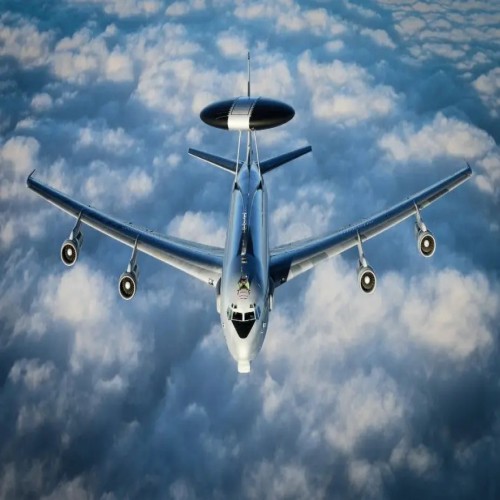
fusible alloy A filler material that melts at approximately 160 F. Used to prevent kinking during tube bending. The alloy is heated in hot water and poured inside the tubing. Once the alloy has cooled and set, the tube can be bent by hand around a forming block or bender. After the tube is bent, it is reheated in hot water to remove the fusible alloy.
fusible plug A hollow plug in an aircraft wheel filled with a material having a specific melting point. If the melting point is reached due to brake heat, the filler will melt out and deflate the tire rather than allow the pressure to increase to the point that would cause a blowout.
fusion The melting together of metal parts.